New Jersey's geography makes basement moisture a structural reality for a significant percentage of residential properties. The state's high water table in Hudson, Essex, and coastal counties, its heavy annual precipitation, and the clay-heavy soils that retain water rather than drain it — these are conditions that put basement waterproofing systems under constant stress. Understanding which specific condition is driving the moisture in your basement is essential to choosing the correct solution, because applying the wrong fix to a wet basement is an expensive way to make no progress.
Common Causes in NJ
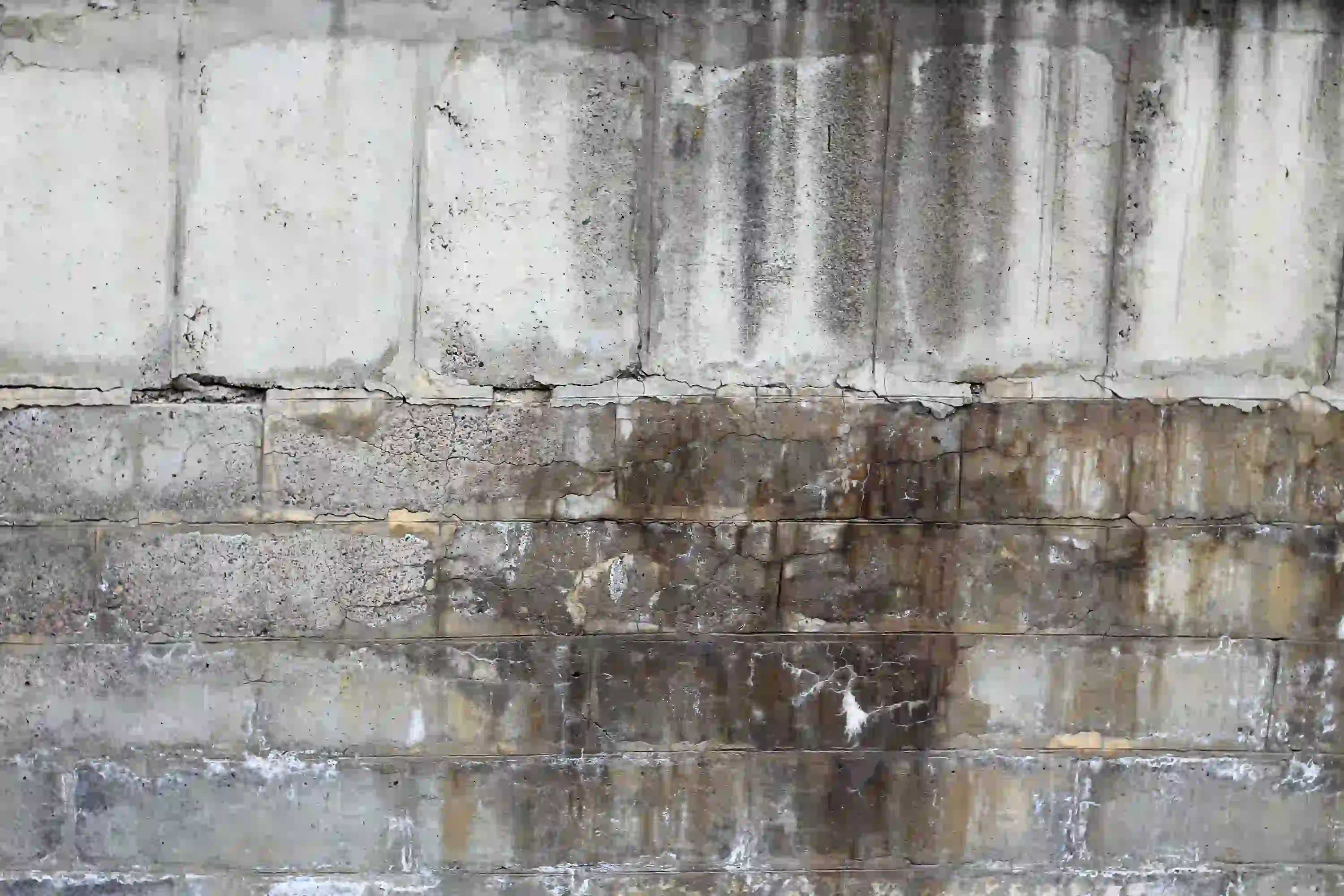
The most frequent cause of wet basement walls in New Jersey is water infiltration through deteriorated mortar joints in block or brick foundation walls. As mortar ages, it shrinks and loses adhesion, creating pathways for water under hydrostatic pressure. This condition is particularly common in New Jersey homes built before 1980, where the original mortar has had decades to deteriorate without inspection. The solution is repointing — removing the failed mortar to a minimum depth and installing new mortar formulated for the specific wall type.
The second most common cause is hydrostatic pressure from the surrounding soil. When water-saturated soil accumulates against the foundation wall — from poor surface drainage, clogged gutters, or inadequate grading — it pushes water through even sound concrete under pressure. This condition cannot be solved with interior coatings alone. It requires exterior drainage correction, a perimeter drain tile system, or an interior drainage channel and sump pump to relieve the pressure before it reaches the wall surface.
Condensation vs. Infiltration
Not all basement wall moisture is infiltration. Condensation — warm, humid air contacting a cool basement wall — can look identical to water seeping through the wall but has a completely different cause and solution. The standard test is straightforward: tape a piece of aluminum foil flat against the wet wall section, seal all four edges, and leave it for 24 to 48 hours. If moisture accumulates on the outside surface of the foil, the problem is condensation. If moisture accumulates on the wall-side surface of the foil, water is coming through the wall.
Condensation problems in New Jersey basements are typically resolved with dehumidification, improved ventilation, and insulation. Water infiltration requires structural intervention — repointing, exterior waterproofing, crack injection, or interior drainage. Treating a condensation problem as infiltration wastes money, while treating infiltration as condensation allows structural damage to continue.
Waterproofing Strategies
Exterior waterproofing — applying a membrane to the outside face of the foundation wall and installing drainage at the footing level — is the most comprehensive solution for wet basements in New Jersey. It addresses moisture at its entry point before it reaches the wall. The limitation is cost and disruption: exterior waterproofing requires excavating around the foundation, which is expensive and often impractical for finished properties.
Interior waterproofing does not prevent water from entering the wall — it manages water after it has entered by capturing it at the base of the wall and routing it to a sump pump. For existing New Jersey homes where exterior excavation is impractical, an interior drain tile system combined with crack injection and repointing of active mortar joint failures provides effective moisture management at a fraction of the cost.
The Risk of Ignoring Moisture
A wet basement wall that is not addressed does not stay at the same level of deterioration — it progresses. Water infiltrating through mortar joints carries dissolved minerals that deposit as efflorescence and, more importantly, dissolves the bond between mortar and masonry, widening the pathway with each wet season.
Chronic basement moisture promotes mold growth that affects air quality throughout the building and causes rot in floor joists and sill plates. In New Jersey's climate, early action on basement moisture is always the more economical choice.