
This question matters particularly in New Jersey because the state's climate is one of the most demanding environments for concrete in the country. Freeze-thaw cycling, road salt exposure, summer heat, and the heavy precipitation the state receives every year put stress on every concrete surface. This guide explains what determines concrete driveway lifespan in New Jersey and what your contractor should be doing on every project.
Installation Quality Factors
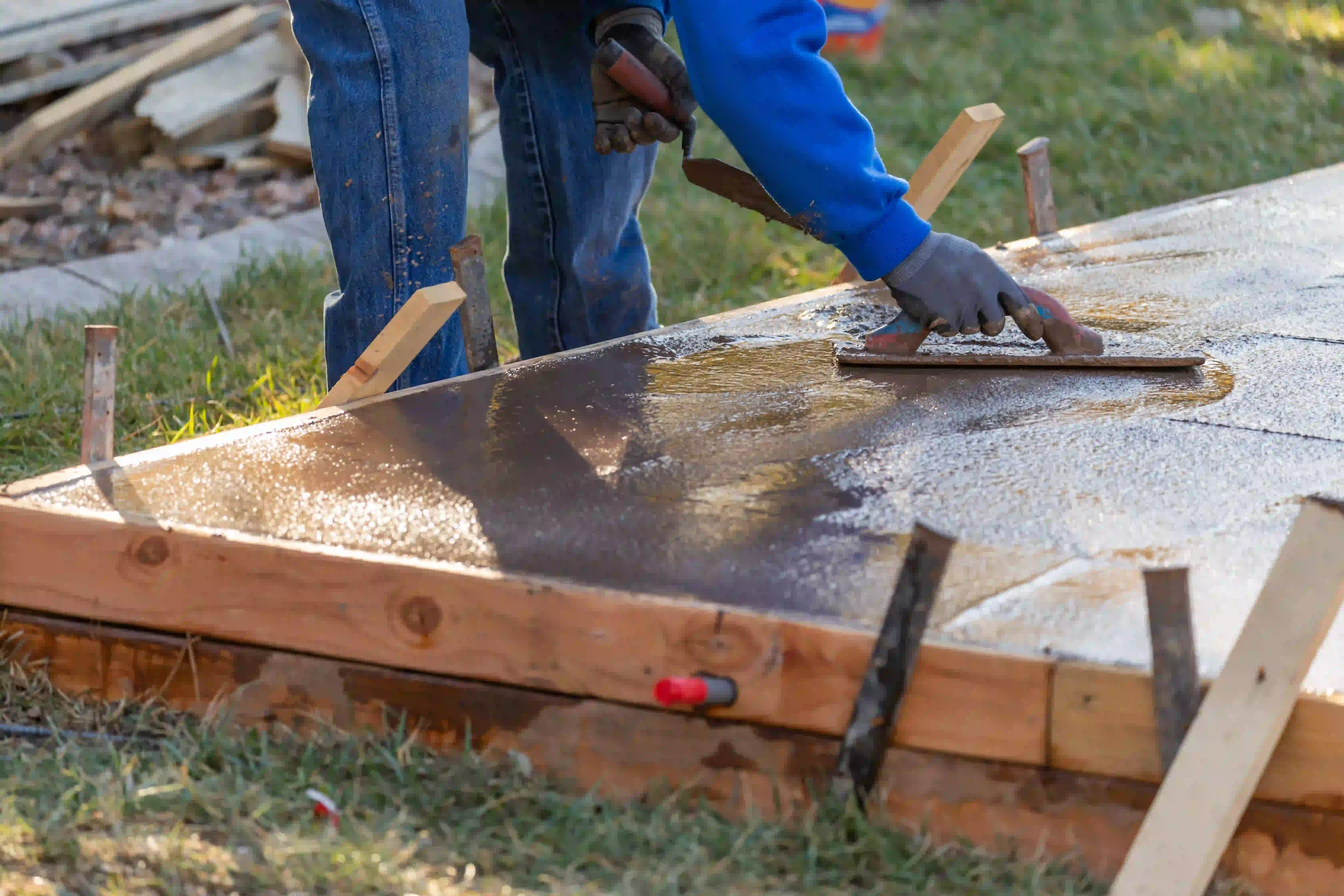
Research on concrete durability consistently shows that the three installation decisions with the greatest effect on performance are: the use of air-entrained concrete, finishing the surface only after bleed water has evaporated, and adequate curing time. Air entrainment introduces microscopic air voids that absorb the expansion pressure of freezing water, dramatically reducing scaling in New Jersey's freeze-thaw climate.
Finishing concrete while bleed water is still present on the surface — a shortcut that speeds up the work — traps a thin layer of high water-to-cement ratio paste at the top of the slab. This layer has lower strength and is the first material to scale during freeze-thaw cycling. A contractor who respects the curing process will produce a driveway surface that resists scaling; one who rushes finishing will produce one that fails prematurely.
Base Preparation & Lifespan
The base below a concrete driveway is as important as the concrete itself. A driveway poured on poorly compacted subgrade will settle unevenly within the first few years, creating sloped sections that collect water and panels that rock under vehicle loads. The correct base for a New Jersey residential driveway is a minimum four-inch compacted crushed stone layer installed over a well-compacted subgrade.
In areas of New Jersey with high clay content soils — common in Essex, Union, and Middlesex counties — additional base depth and drainage tile may be required to prevent water accumulation below the slab. Clay soils expand when wet and contract when dry, creating differential movement that causes cracking in concrete slabs that are not supported by adequate drainage.
Maintenance Strategies
Even the best-installed concrete driveway benefits from routine maintenance in New Jersey's climate. The highest-return activities are: sealing cracks as soon as they appear, applying a penetrating silane-siloxane sealer every three to five years to reduce water absorption by up to 90 percent, and avoiding calcium chloride de-icers on the concrete surface. Sodium chloride or sand should be used instead for winter traction.
The driveway apron receives the most vehicle traffic and the highest salt exposure from road spray. It is the first section to show deterioration on most New Jersey driveways. Paying particular attention to sealing and de-icer avoidance at the apron extends its life relative to the rest of the driveway. A properly maintained 4,000 PSI air-entrained concrete driveway should reach 25 to 30 years without major structural intervention.
Repair vs. Replacement
The decision comes down to the age of the slab, the extent of the damage, and the condition of the concrete below the surface. A driveway that is 10 years old with isolated cracking is an excellent candidate for targeted panel replacement. However, a driveway that is 20 to 25 years old with widespread surface scaling and aggregate exposure has reached the end of its practical service life.
Pro-Tip for NJ Homeowners
Full replacement at the 25-year mark is often the more economical long-term decision. Resurfacing over a structurally deteriorated slab typically fails within two to three seasons in New Jersey. A new installation specified with air-entrained concrete and adequate base preparation provides a fresh 30-year lifecycle for your property investment.