
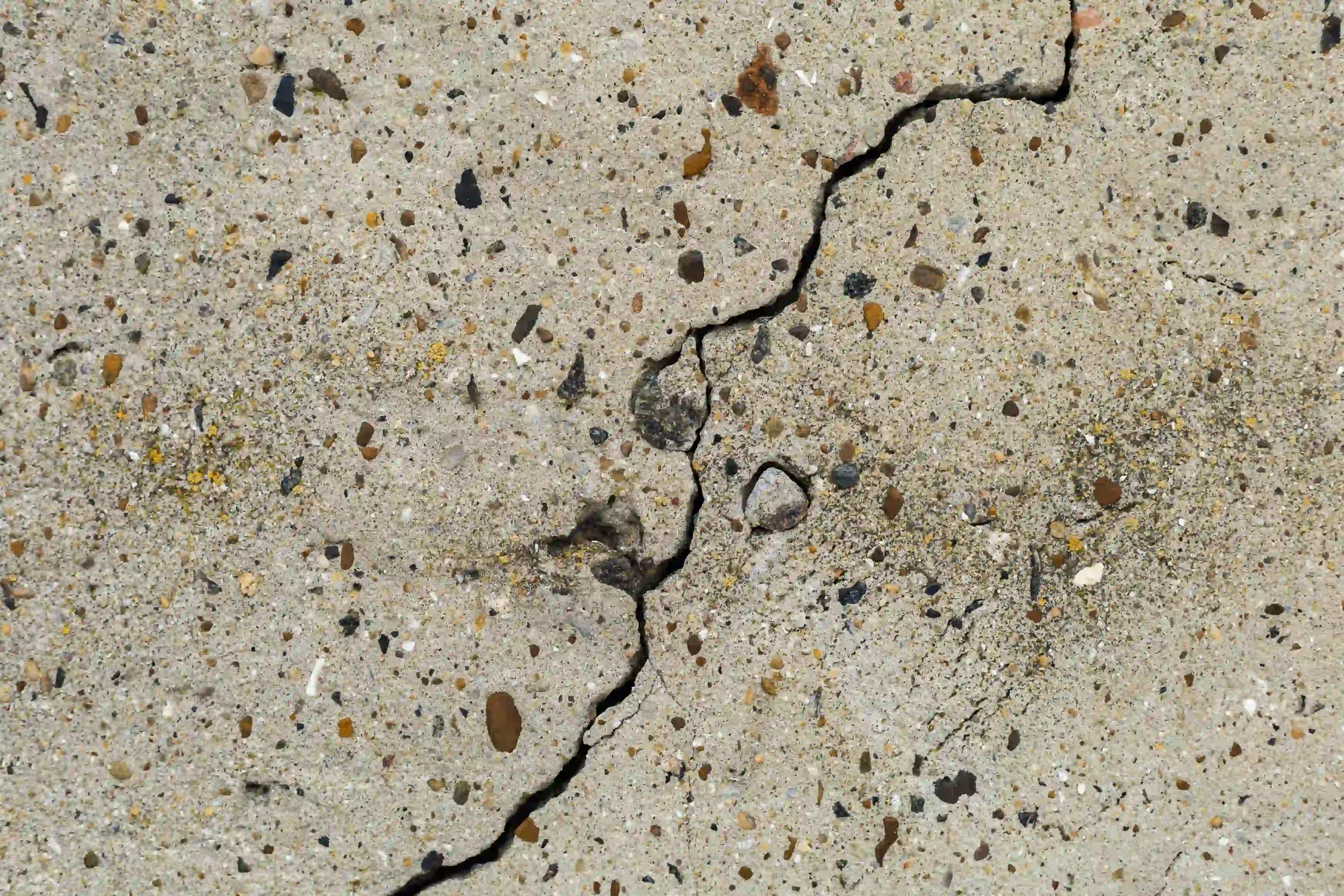
New Jersey experiences some of the most demanding conditions for concrete in the northeastern United States. Temperatures swing from summer highs above 95 degrees Fahrenheit to winter lows that can drop well below zero, and the state receives an average of 46 inches of precipitation annually. Add road salt and de-icing chemical exposure from vehicles and adjacent streets, and the conditions for concrete deterioration are present every single winter. The good news is that most concrete damage in New Jersey is preventable with proper installation and can be addressed with targeted repair when caught early.
What Causes Concrete to Crack in NJ
Concrete cracking in New Jersey falls into two main categories: shrinkage cracks that develop during the initial curing process, and structural cracks that form after the concrete has hardened due to ground movement or overloading. Shrinkage cracks are hairline-width and typically appear within the first weeks or months after a pour. They are a normal byproduct of the drying process and are generally cosmetic unless they allow water infiltration.
Structural cracks are more serious. They appear after the concrete has been in place for some time and indicate that the slab sections have moved independently. The most common cause in New Jersey is frost heave — the expansion of water-saturated soil below the slab during winter freeze cycles. When the subgrade was not properly compacted at installation, or when the gravel base layer is too thin to provide drainage, water accumulates below the slab and creates the conditions for progressive cracking year after year.
What Causes Concrete Spalling in NJ
Spalling is the loss of the top surface layer of concrete — the visible flaking, pitting, and roughening that turns a smooth driveway into a deteriorating mess. In New Jersey, spalling is almost always caused by freeze-thaw cycling combined with de-icing chemical exposure. When concrete absorbs water and that water freezes inside the slab, it expands and breaks apart the paste matrix at the top of the concrete. Road salt and calcium chloride de-icers accelerate this process significantly.
The underlying cause of spalling is almost always an installation problem rather than a material defect. Concrete that was finished while bleed water was still rising to the surface — a common shortcut that traps a weak, water-rich layer at the top — is extremely vulnerable to spalling. Concrete that was not air-entrained, or that used too high a water-to-cement ratio in the mix, will begin to scale within two to three New Jersey winters regardless of how carefully it is maintained afterward. These are contractor decisions made at the time of installation.
Repair Versus Replacement
The repair-versus-replacement decision for cracked or spalled New Jersey concrete depends on two factors: the extent of the damage and the condition of the concrete below the damaged area. Hairline shrinkage cracks can be sealed with flexible polyurethane crack filler to prevent water infiltration — a straightforward maintenance repair that extends the life of an otherwise sound slab. Structural cracks that show vertical displacement between the two sides, or that are accompanied by settlement, require saw-cutting out the affected section and pouring a replacement panel.
Surface spalling that has not penetrated below the mortar layer — roughly the top one-quarter inch of the slab — can be addressed with a properly bonded concrete resurfacer applied over a prepared and primed surface. Once spalling reaches the coarse aggregate, resurfacing is no longer a durable solution and panel replacement is the correct approach. A licensed contractor can assess the depth of deterioration on-site and give you an honest recommendation based on what the slab actually requires.
How to Prevent Concrete Damage
Preventing concrete cracking and spalling in New Jersey begins at installation. The three most important factors are: using air-entrained concrete with a minimum 4,000 PSI compressive strength, finishing the surface only after bleed water has fully evaporated, and curing the concrete for a minimum of seven days before opening it to traffic. These decisions are entirely in the contractor's control and have a greater effect on 25-year durability than any maintenance step a homeowner can take afterward.
After installation, the most effective prevention measures are prompt crack sealing before water infiltrates and freezes inside the joint, avoiding calcium chloride de-icers on concrete surfaces, and applying a penetrating silane-siloxane sealer every three to five years to reduce water absorption.