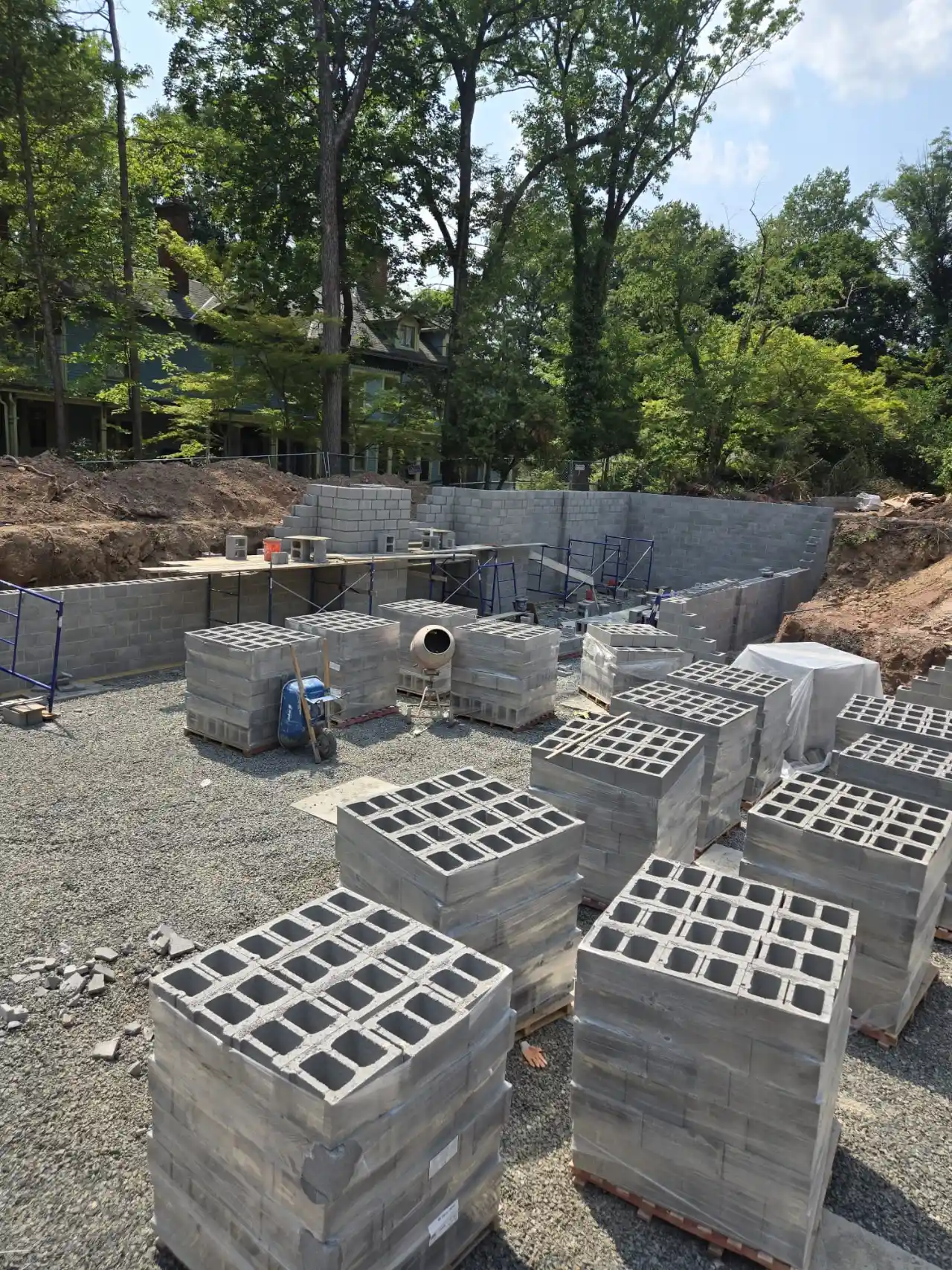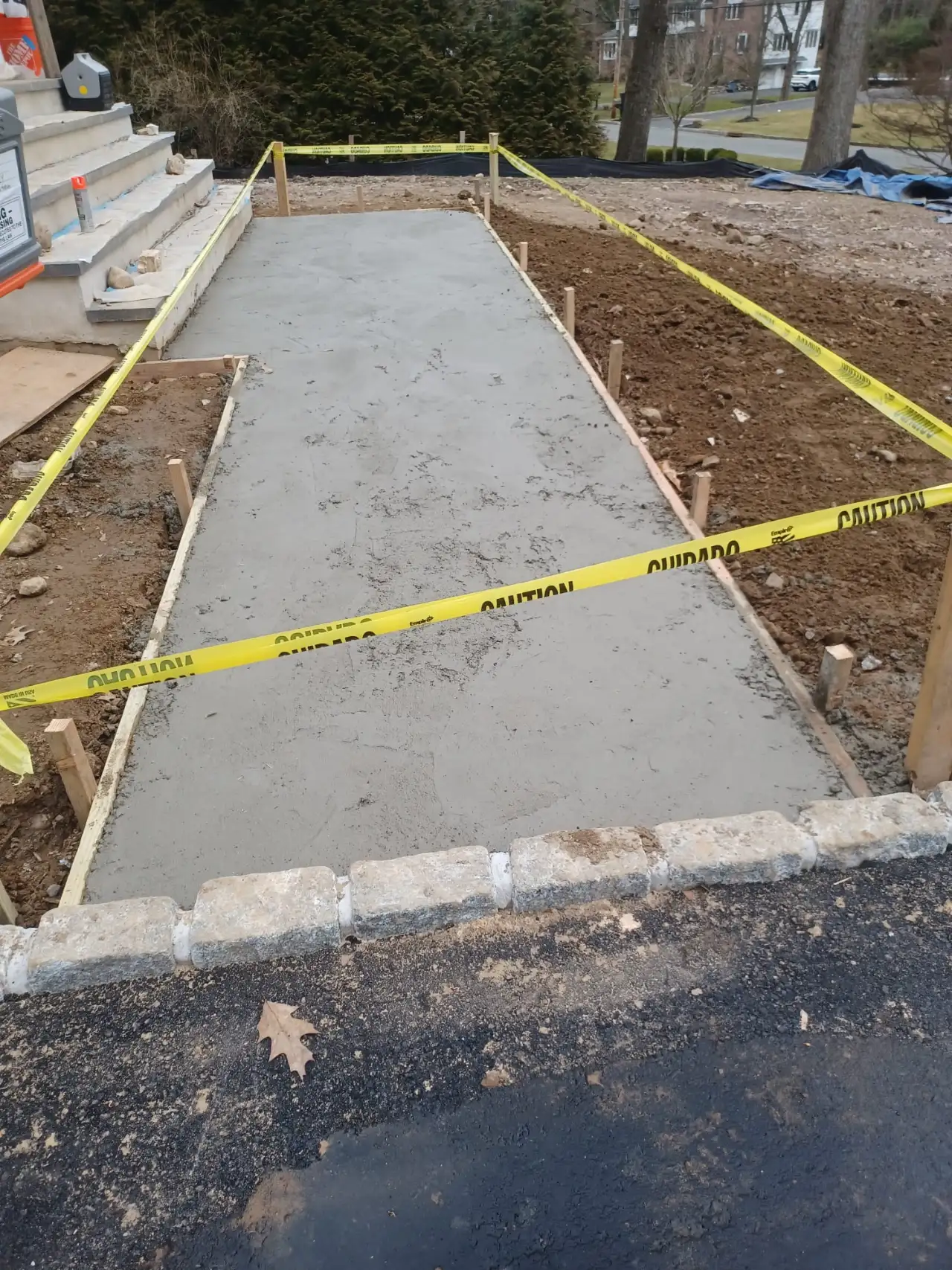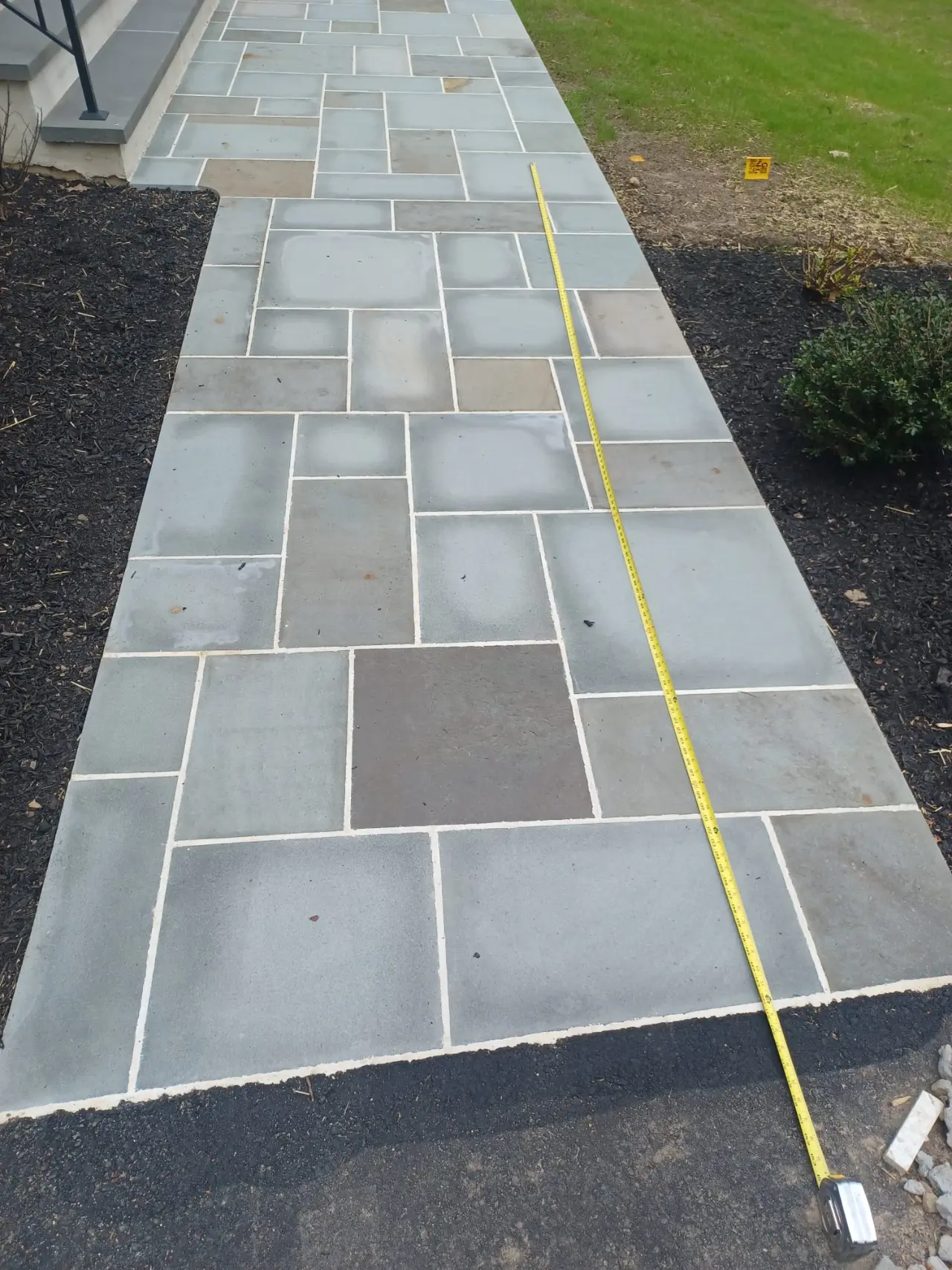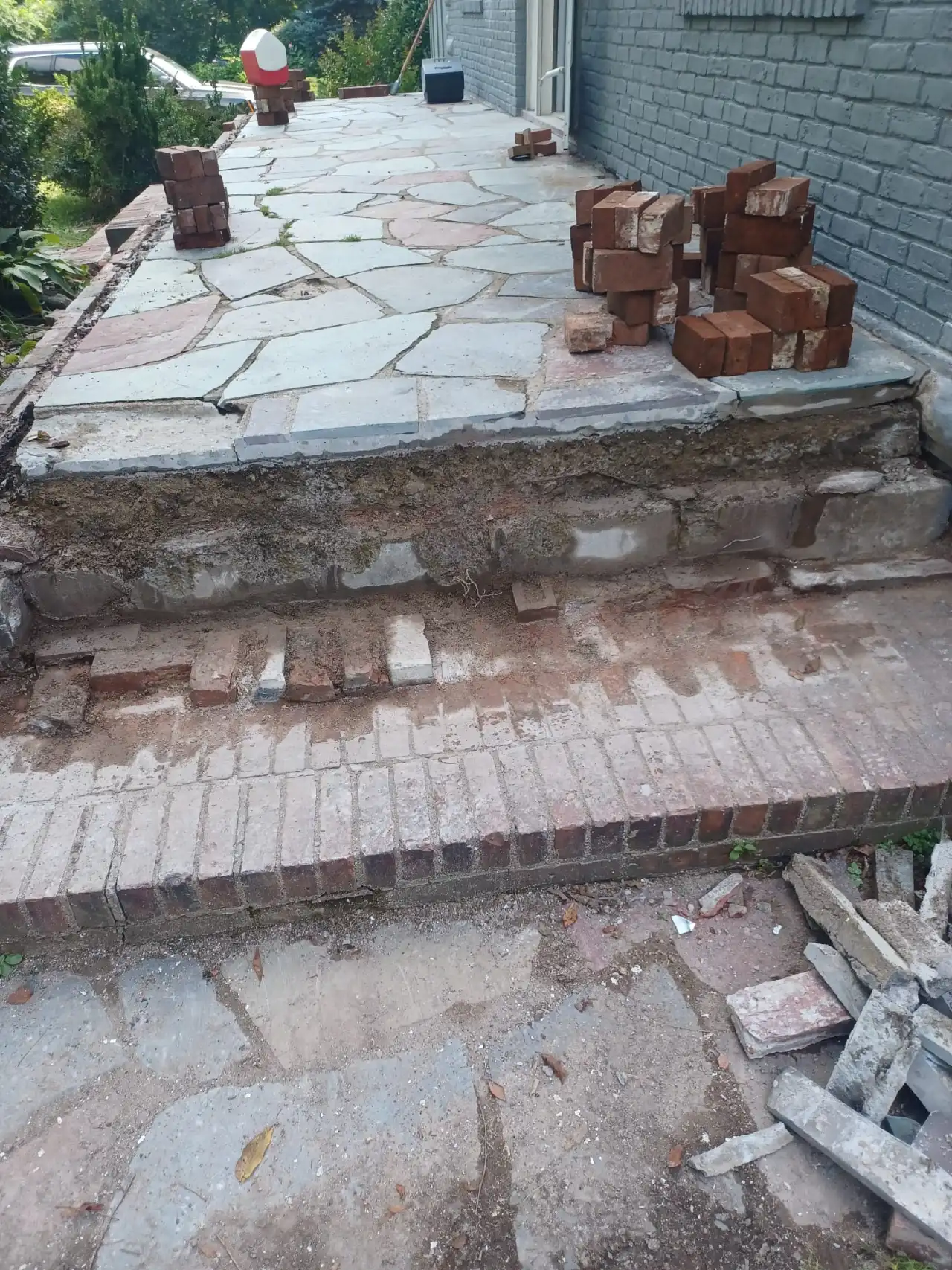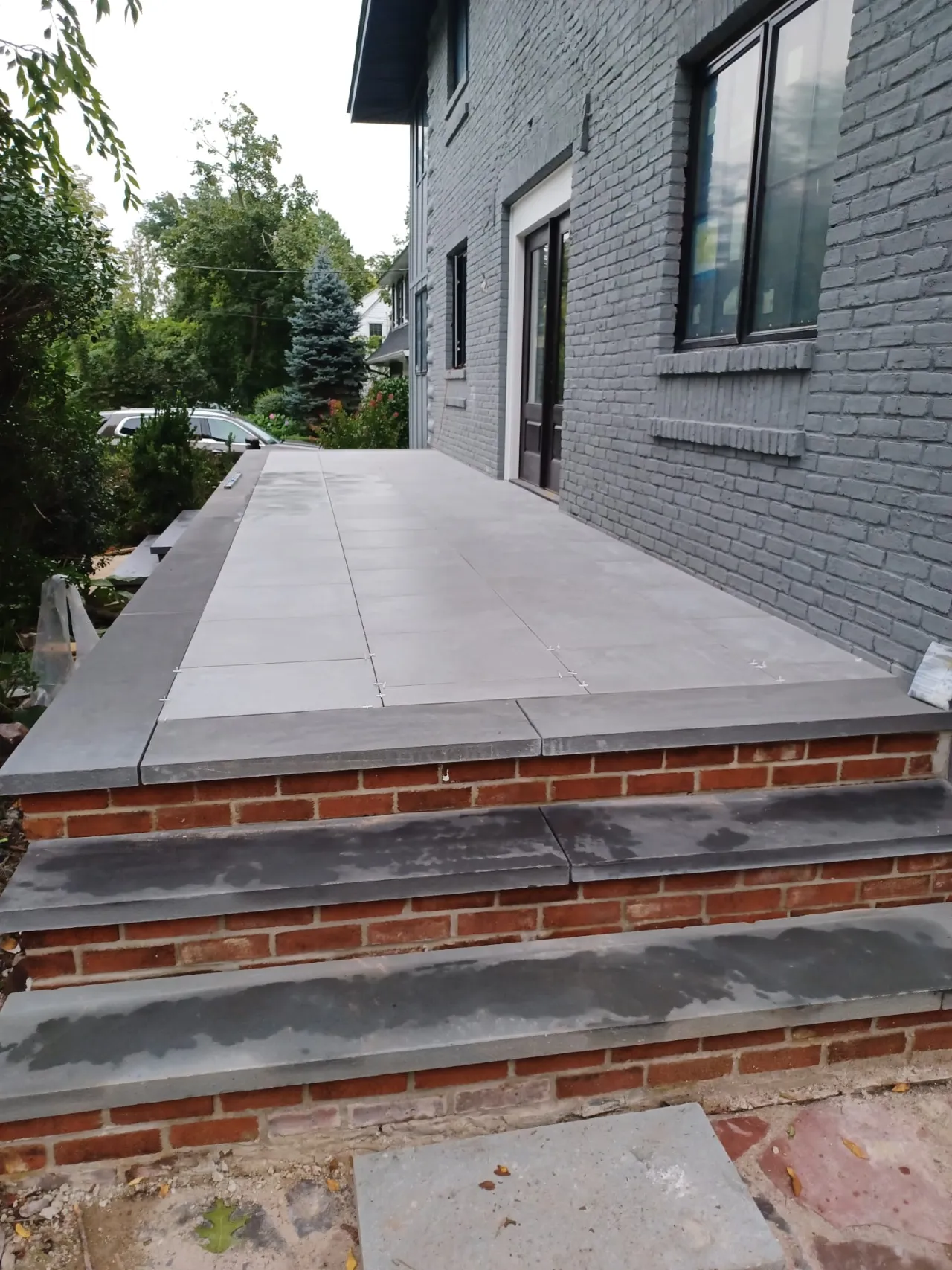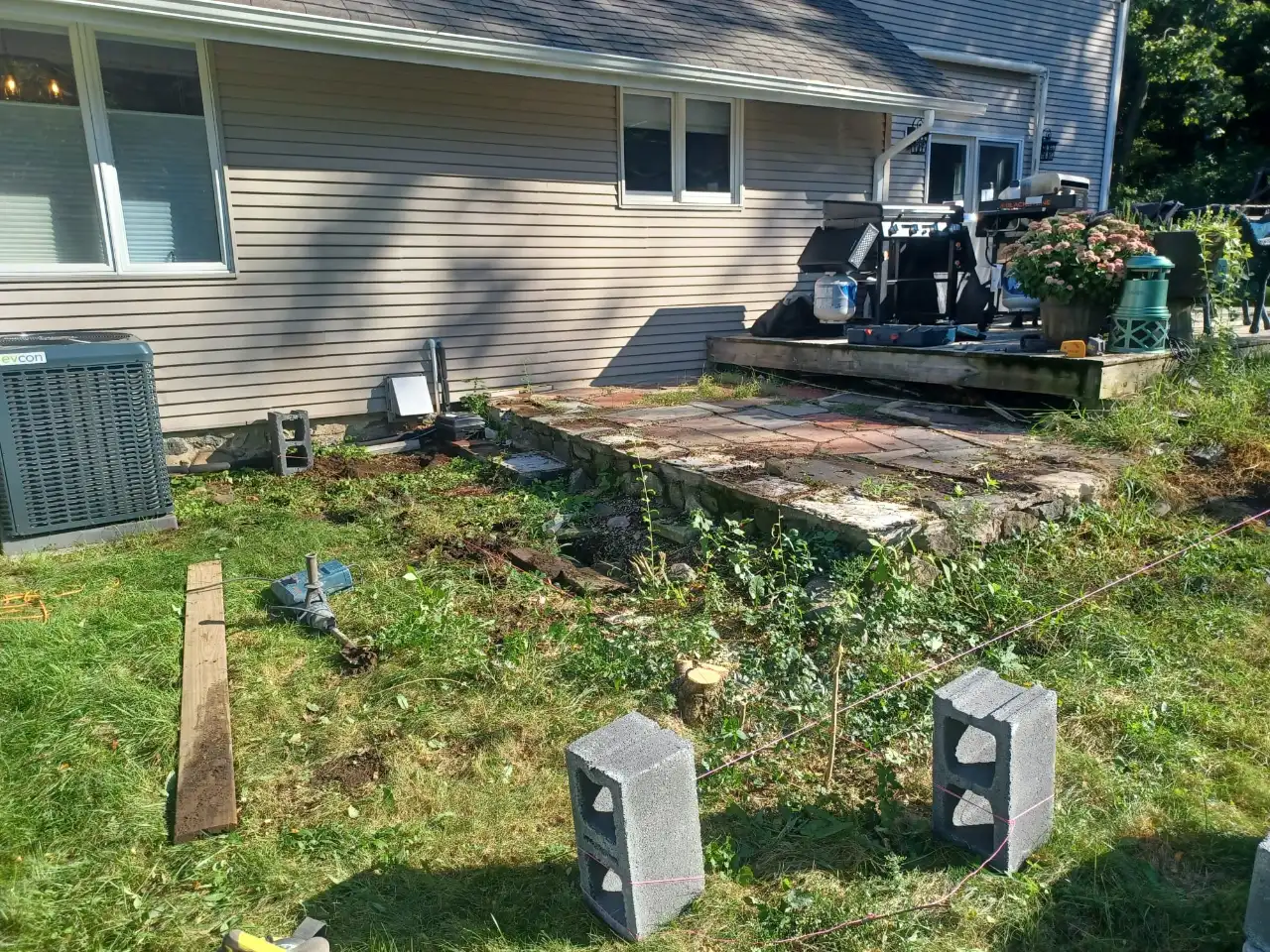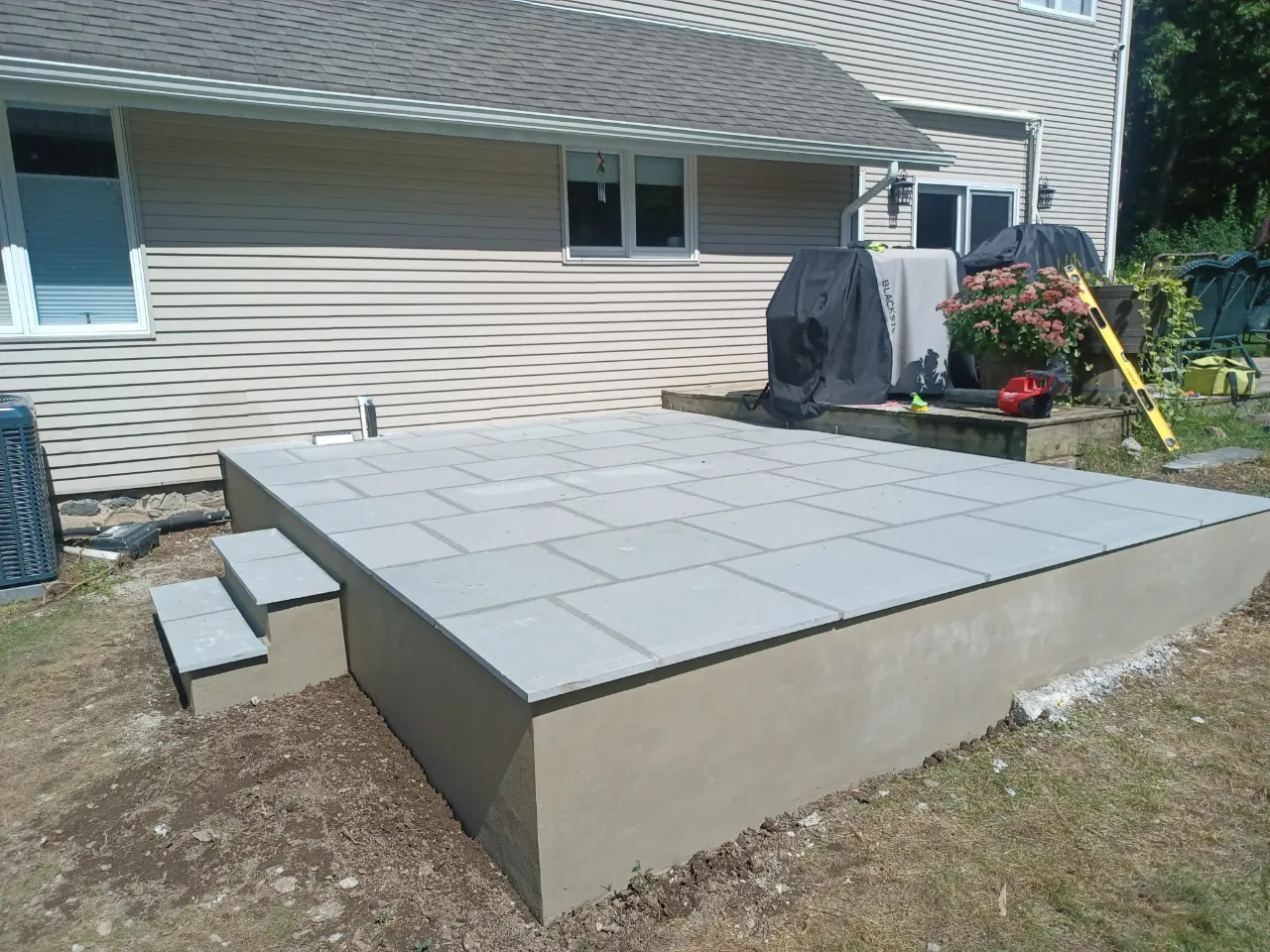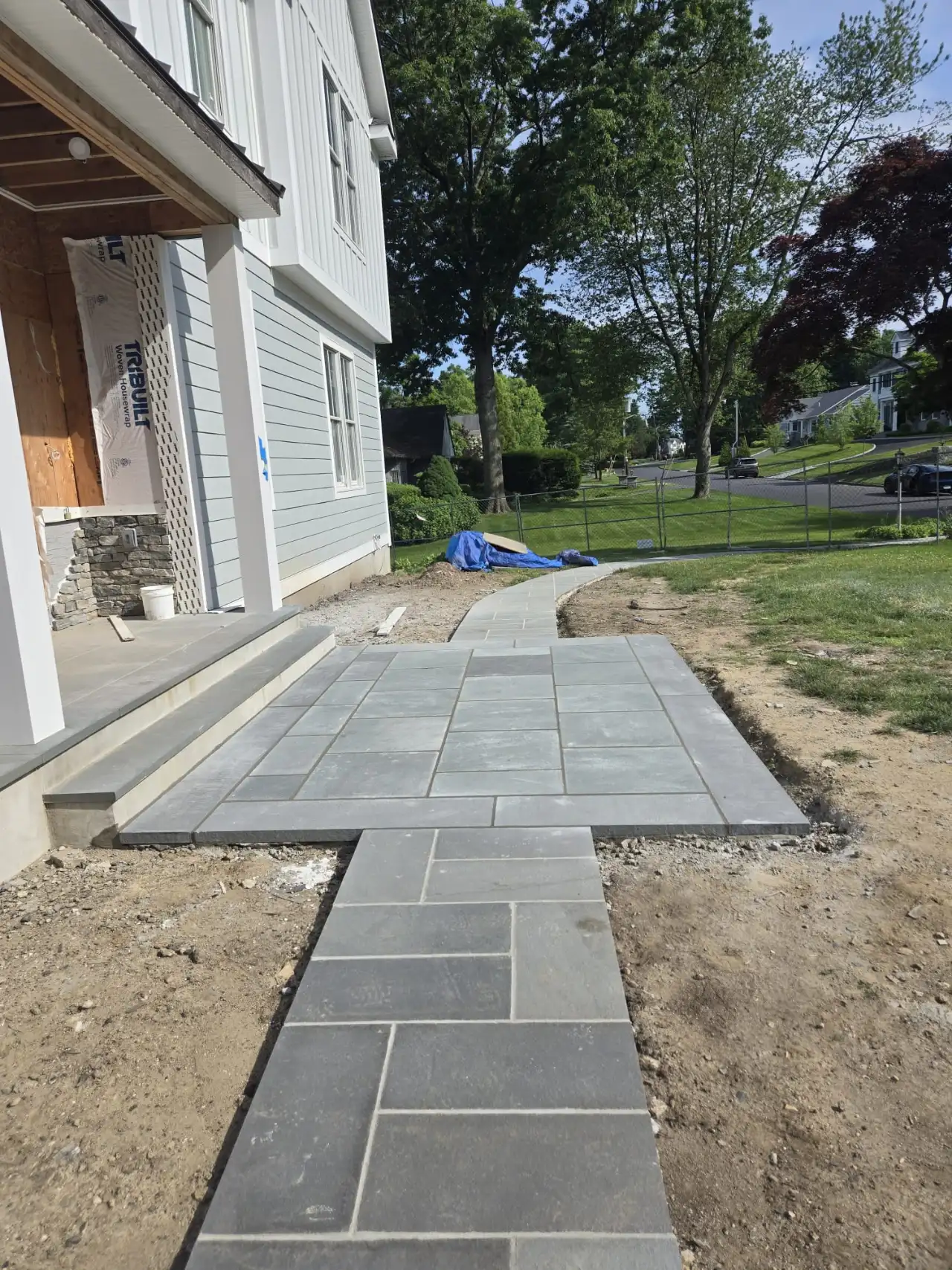
ADM Masonry LLC installs foundations for new residential and commercial construction across New Jersey. Our licensed crew handles site preparation, formwork, concrete placement, and waterproofing — delivering structurally sound foundations built to New Jersey code.
A structurally sound foundation is the single most critical element of any building. Every wall, floor system, and roof load transfers through the foundation to the ground below. In New Jersey, soil conditions vary significantly across the state — from dense urban fill in Essex County to sandy coastal soils in Ocean County — making proper foundation design and installation essential.
ADM Masonry LLC provides foundation installation services for new residential and commercial construction throughout New Jersey. Our process begins with a review of the building plans and a site evaluation to assess soil bearing capacity, groundwater levels, and drainage conditions. This information determines the correct foundation type — slab-on-grade, crawl space, or full basement — and the appropriate reinforcement and waterproofing strategy.
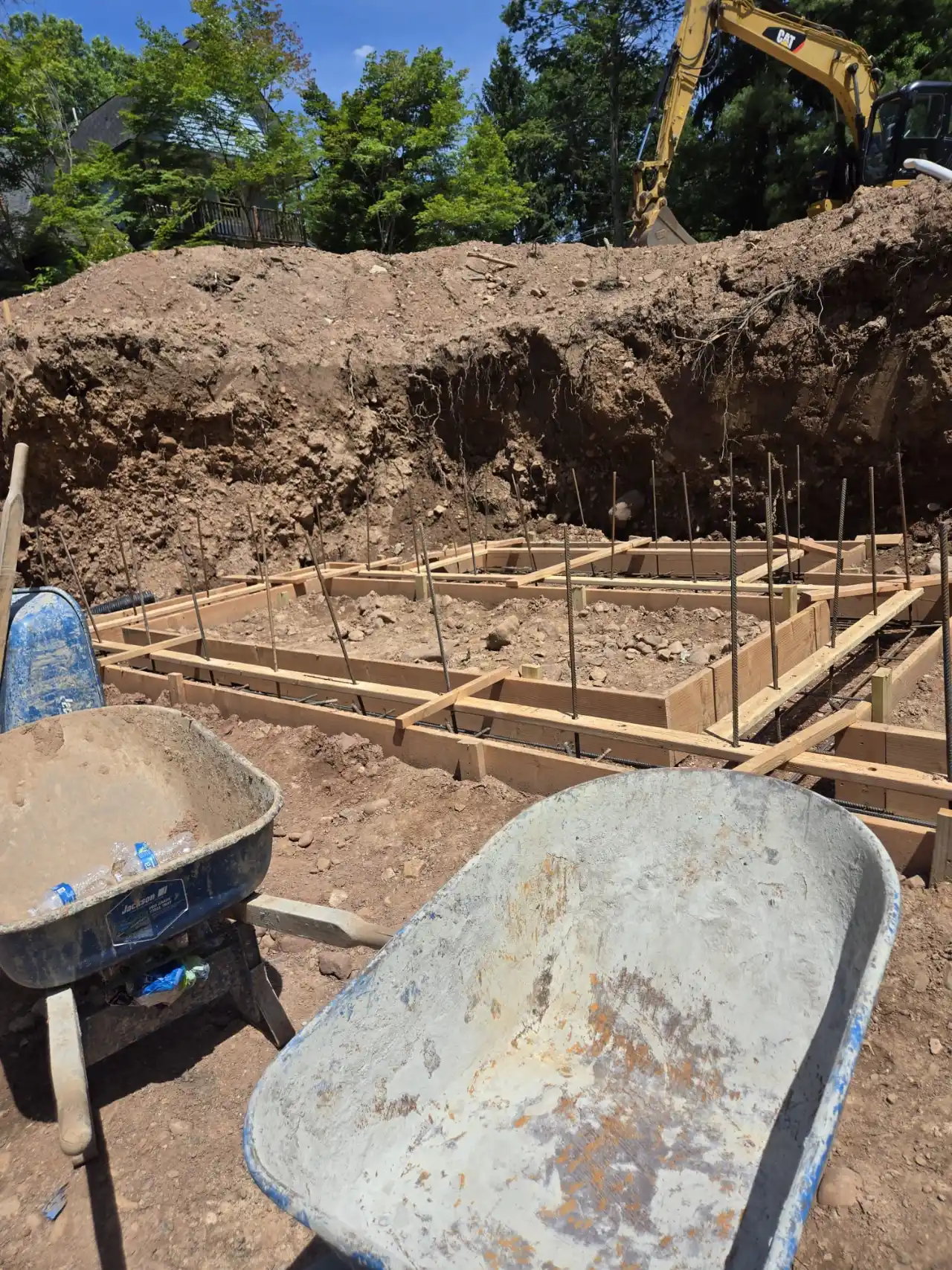
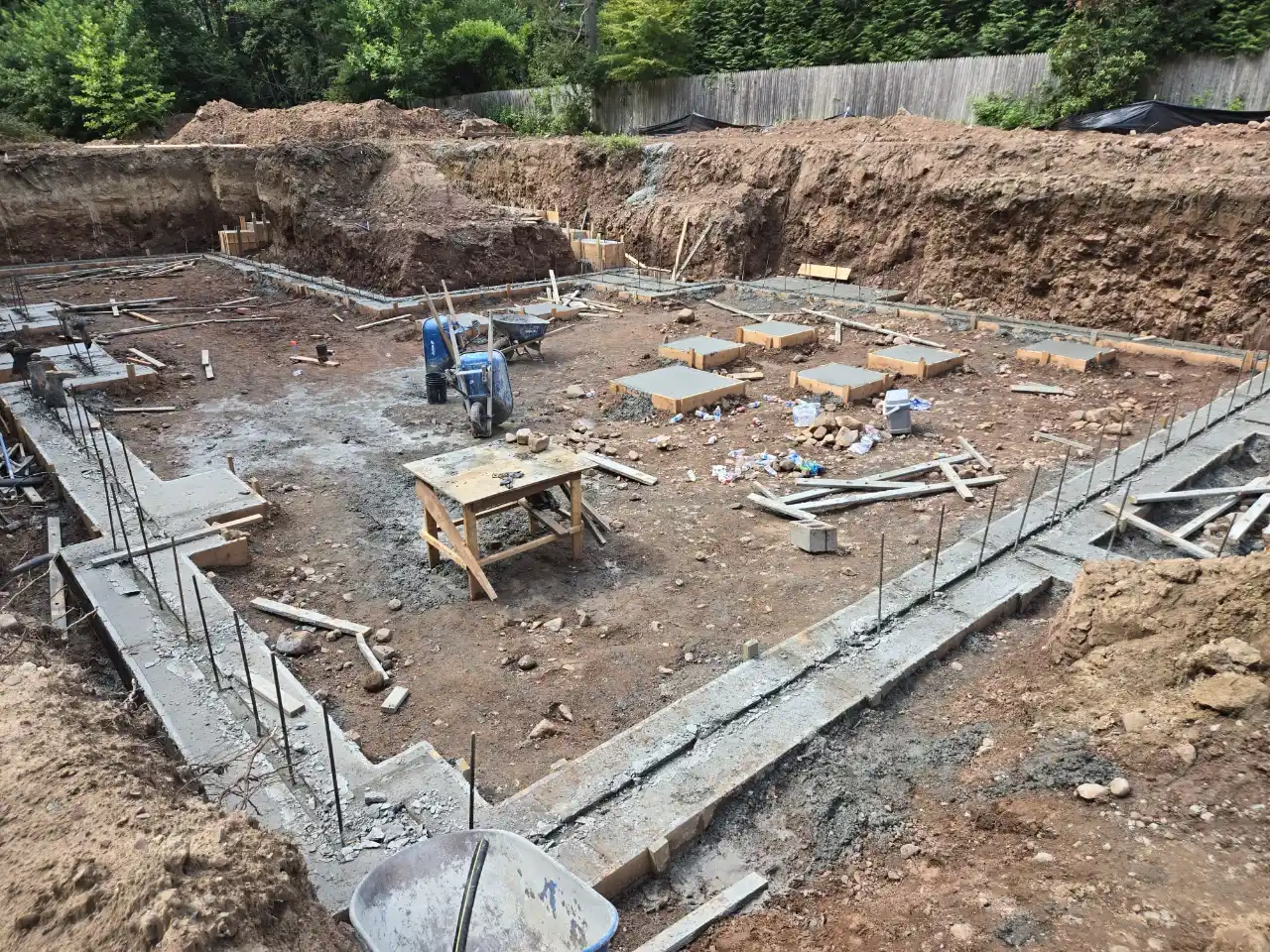
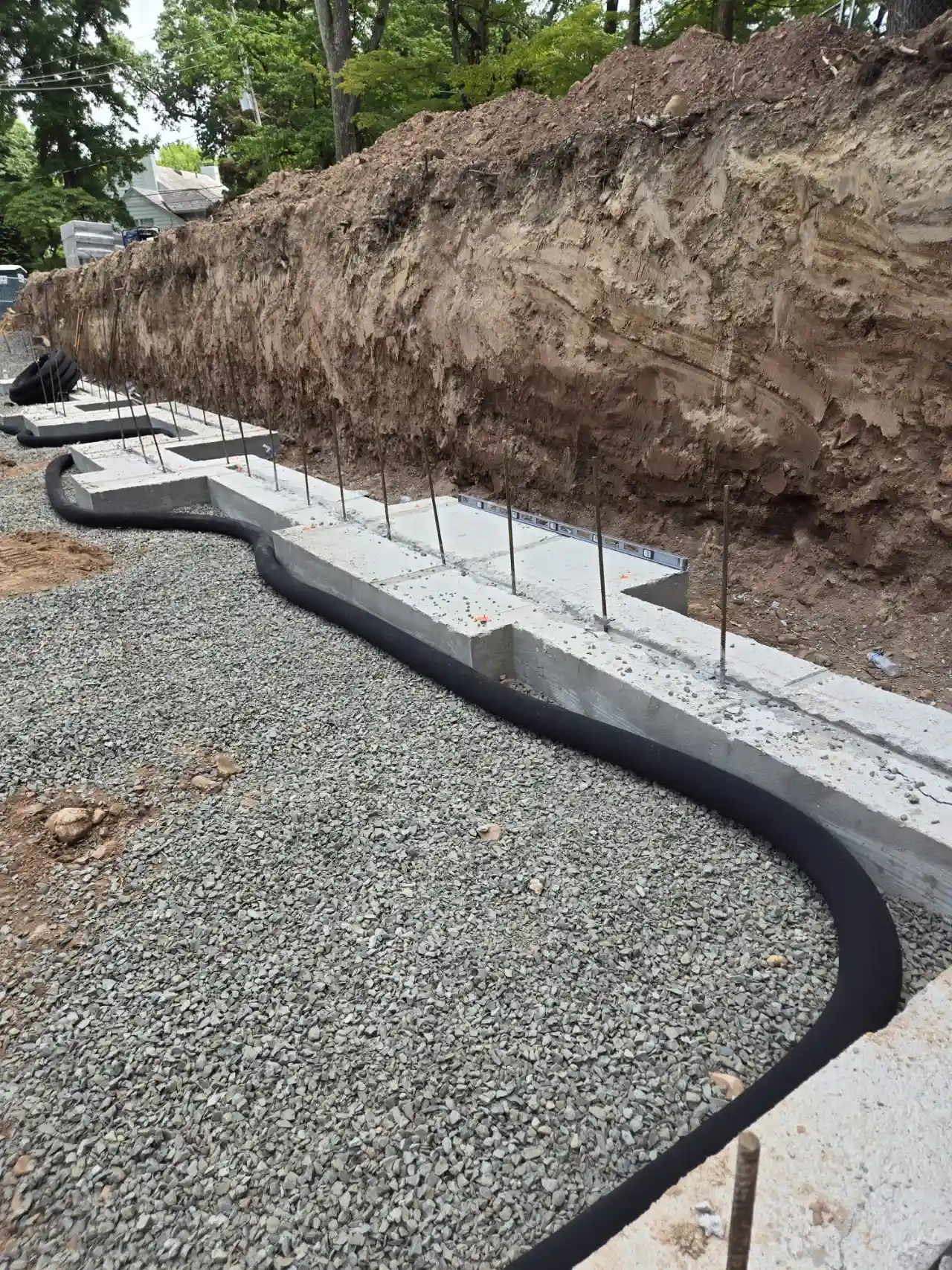
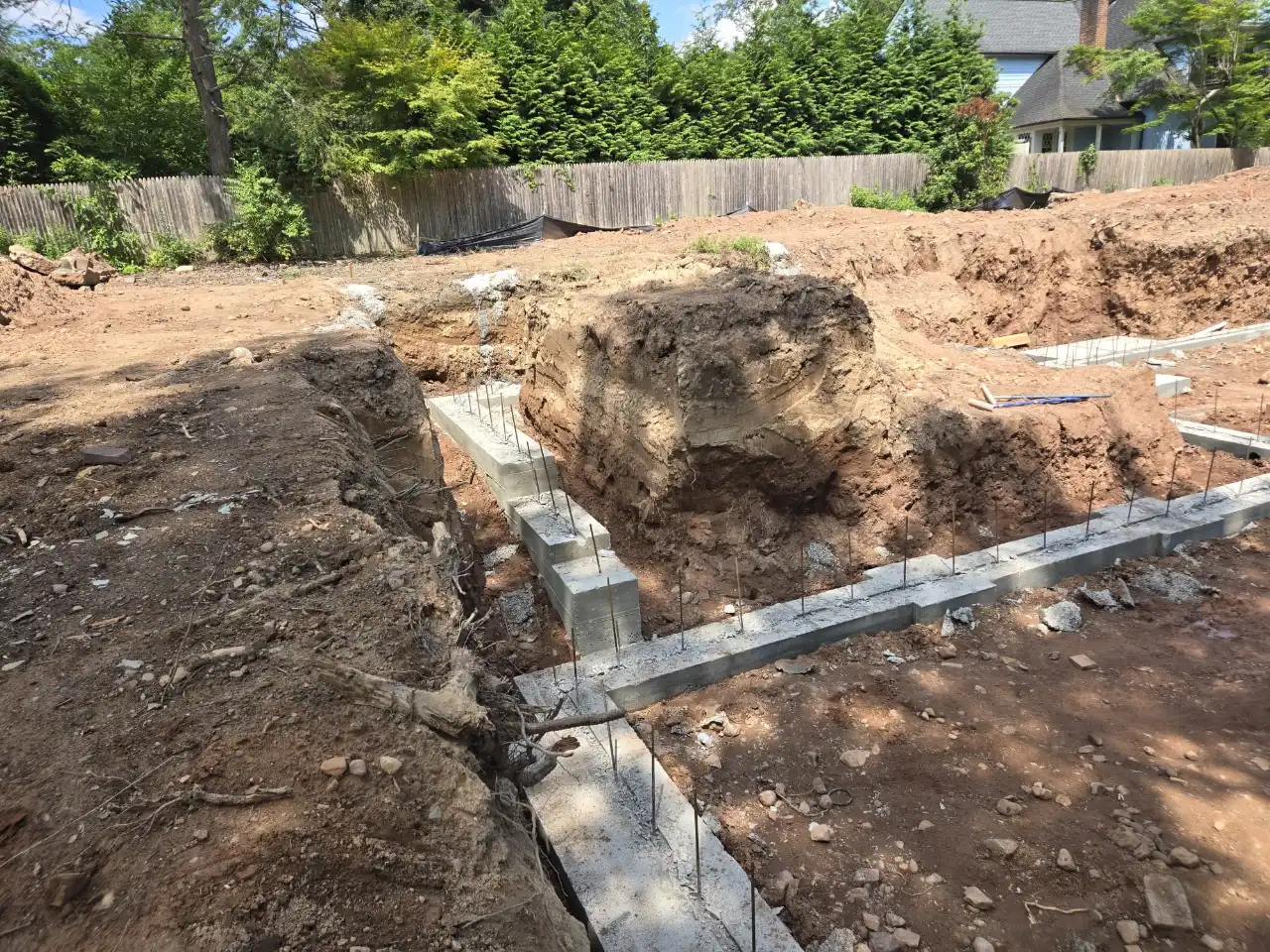
New Jersey's freeze-thaw cycles require that foundation footings extend below the frost line, which the state sets at a minimum of 36 inches below grade. Footings poured above this depth are vulnerable to frost heave — a condition where frozen soil expands and shifts the structure above. Our team designs and pours all footings to meet or exceed this requirement, protecting your building's long-term structural integrity.
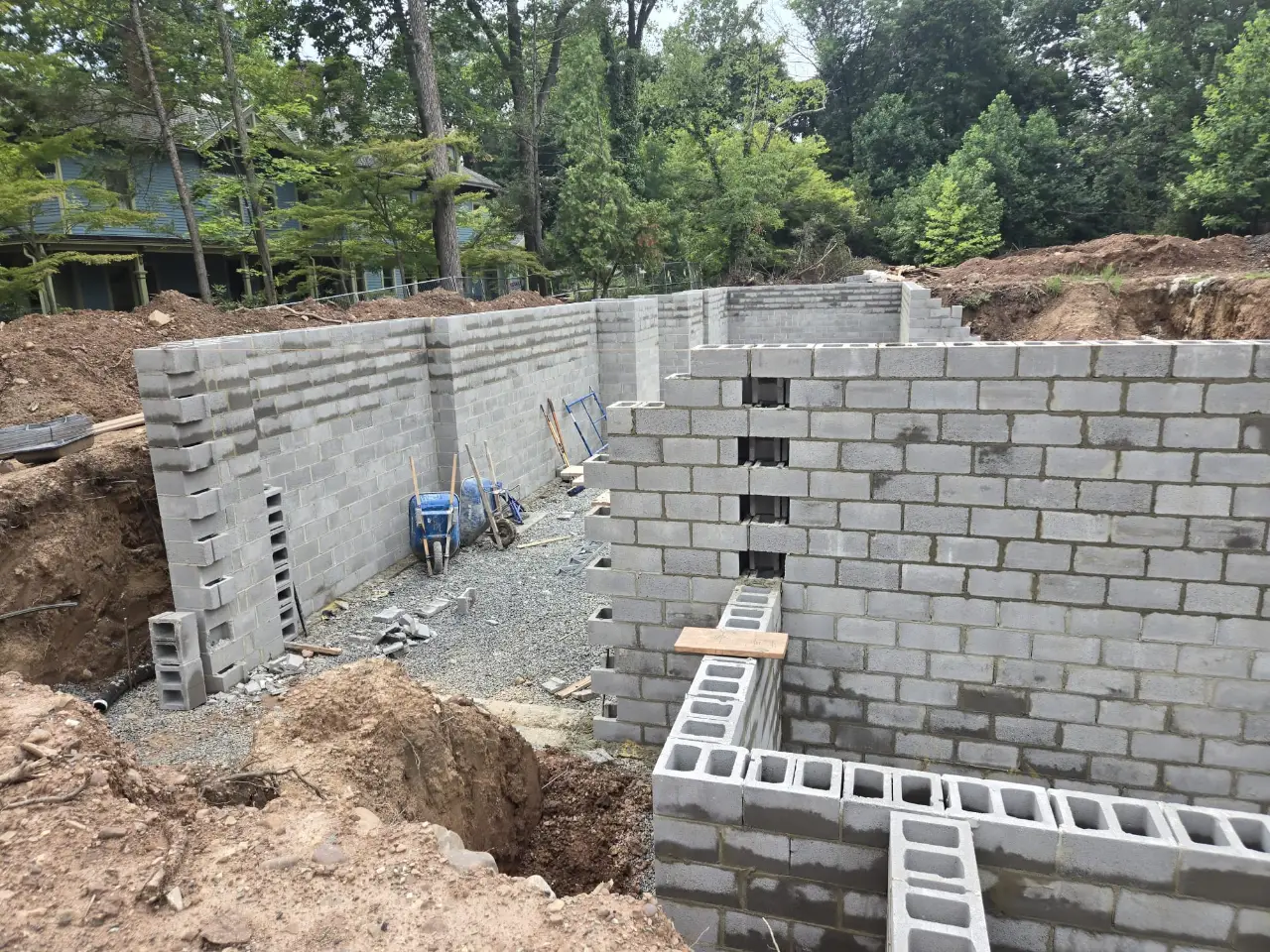
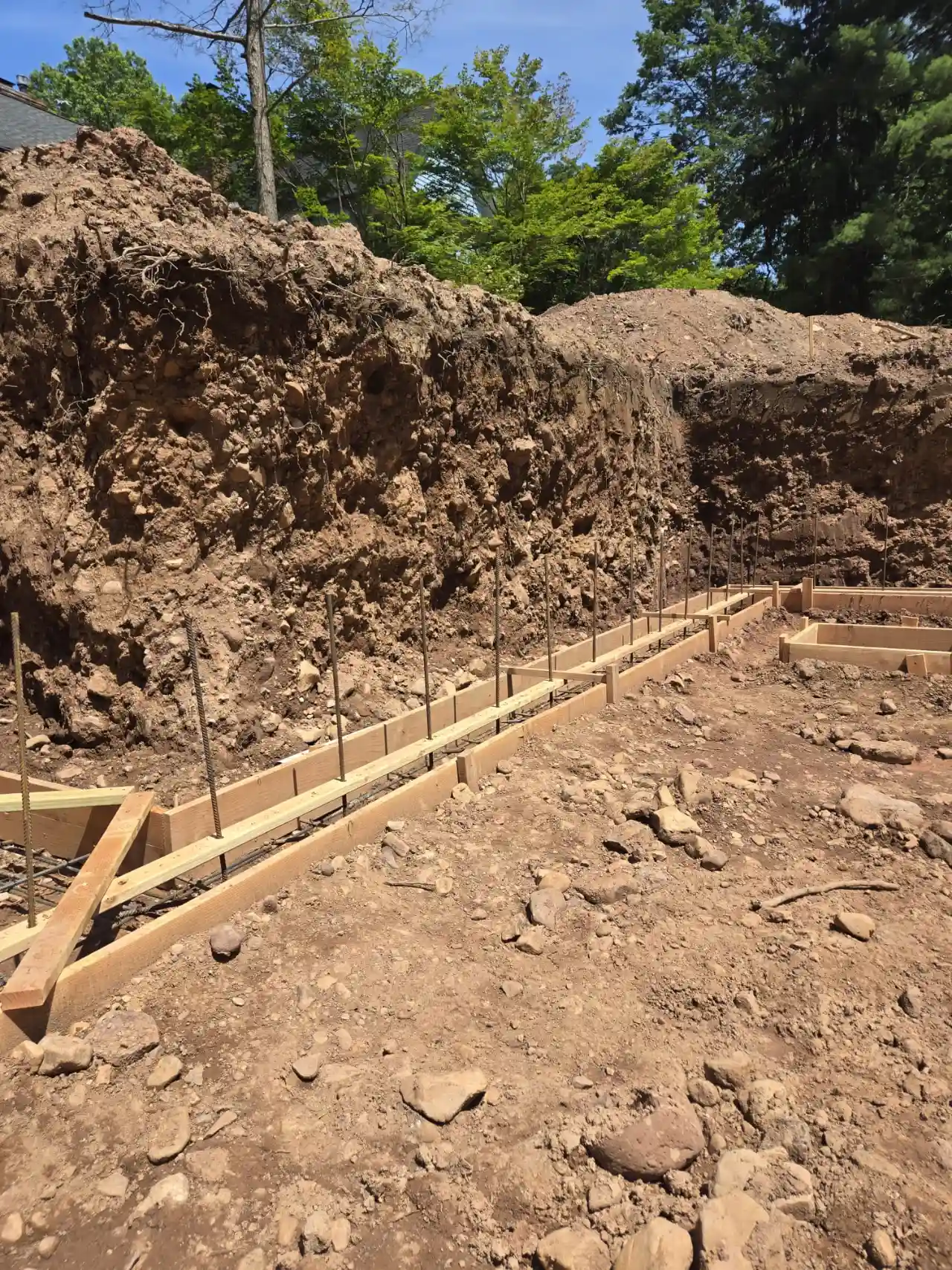
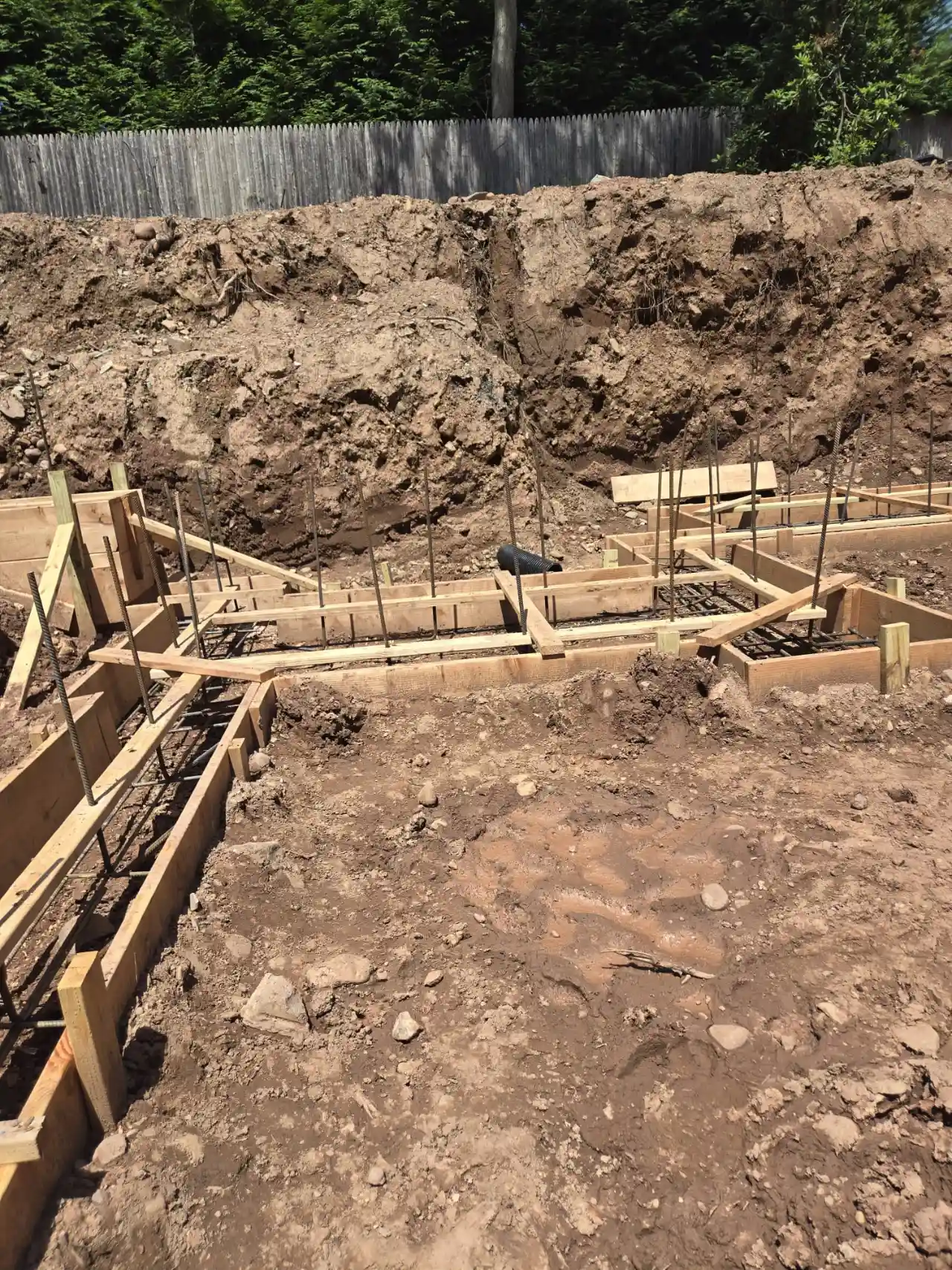
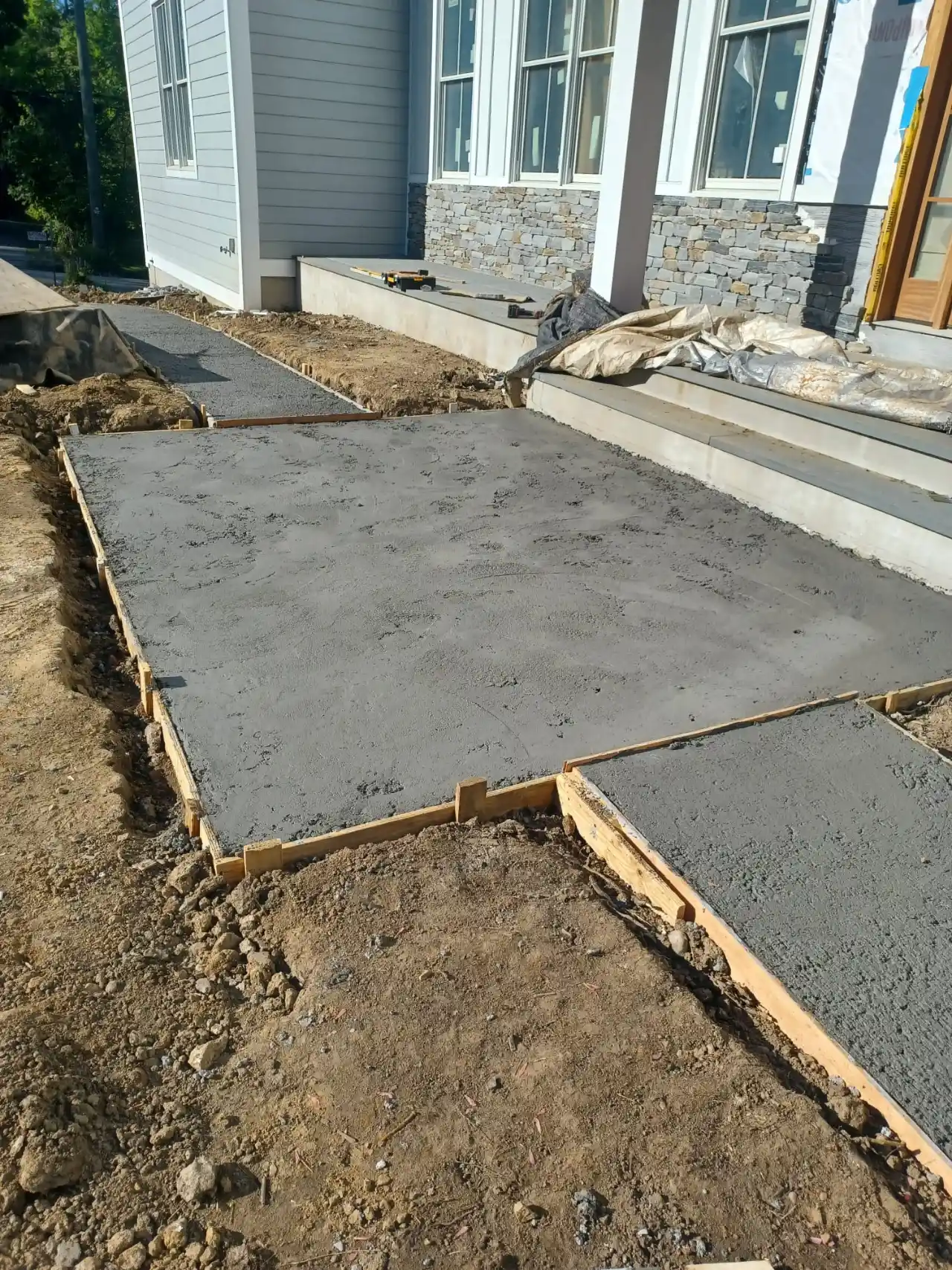
Foundation construction begins with excavation. Our crew coordinates with the excavation contractor to ensure the dig reaches the correct depth and follows the building footprint precisely. Once excavation is complete, we grade and compact the soil base, install granular fill where required by site conditions, and set formwork for the footings and foundation walls.
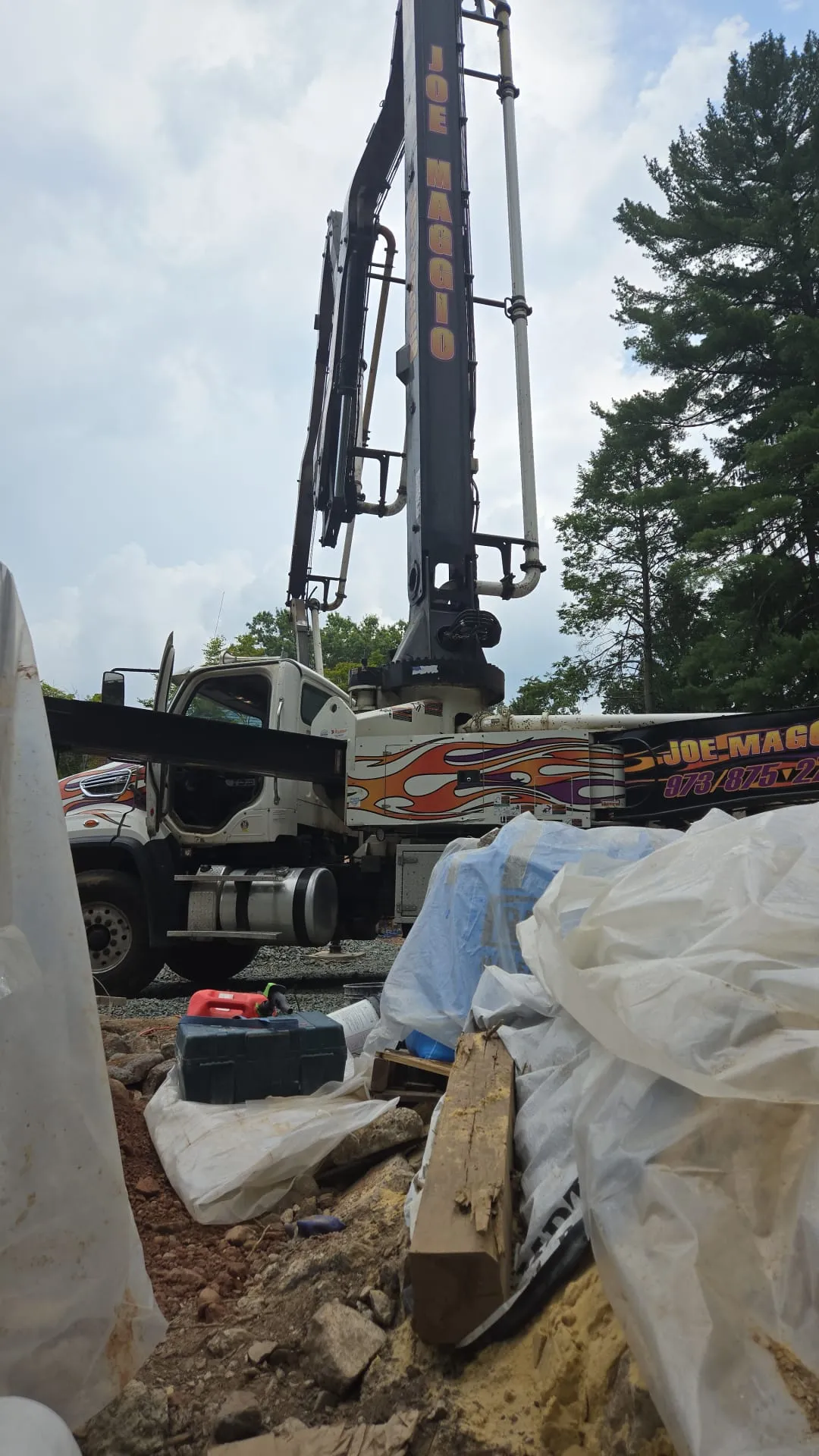
Concrete for foundation work must meet minimum compressive strength specifications — typically 3,000 to 4,000 PSI for residential foundations in New Jersey. We use fiber-reinforced mixes and place rebar or welded wire reinforcement in accordance with the structural drawings. For basement foundations, we install anchor bolts at the top of the wall to connect the sill plate and transfer wind and seismic loads to the structure.
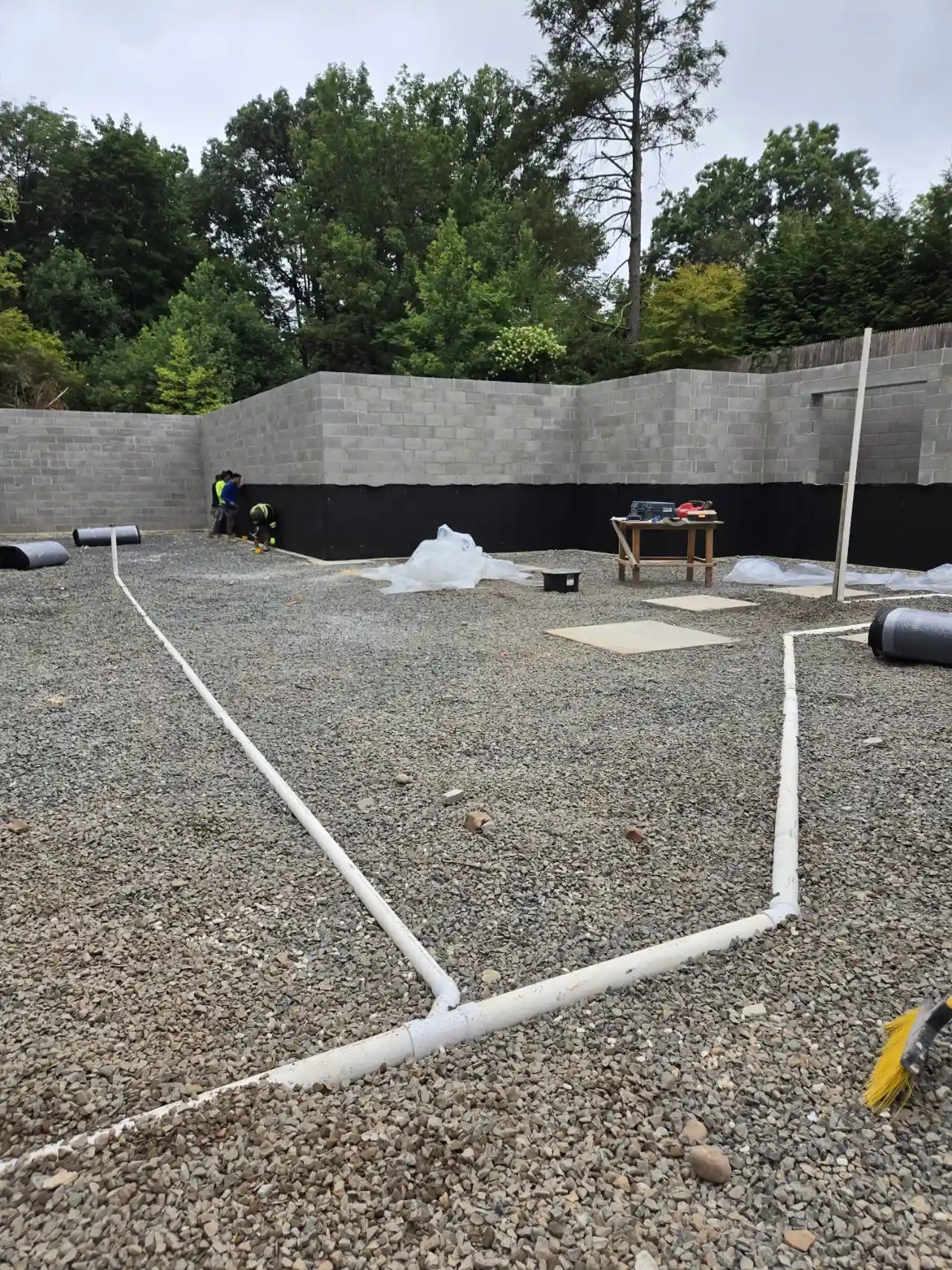
After the concrete cures, we apply a waterproofing membrane to the exterior of the foundation wall before backfilling. Proper waterproofing is critical in New Jersey, where groundwater pressure and heavy rainfall events can infiltrate an unsealed wall within the first few seasons. We also install perforated drain tile at the footing level where site drainage warrants it, directing water away from the structure.
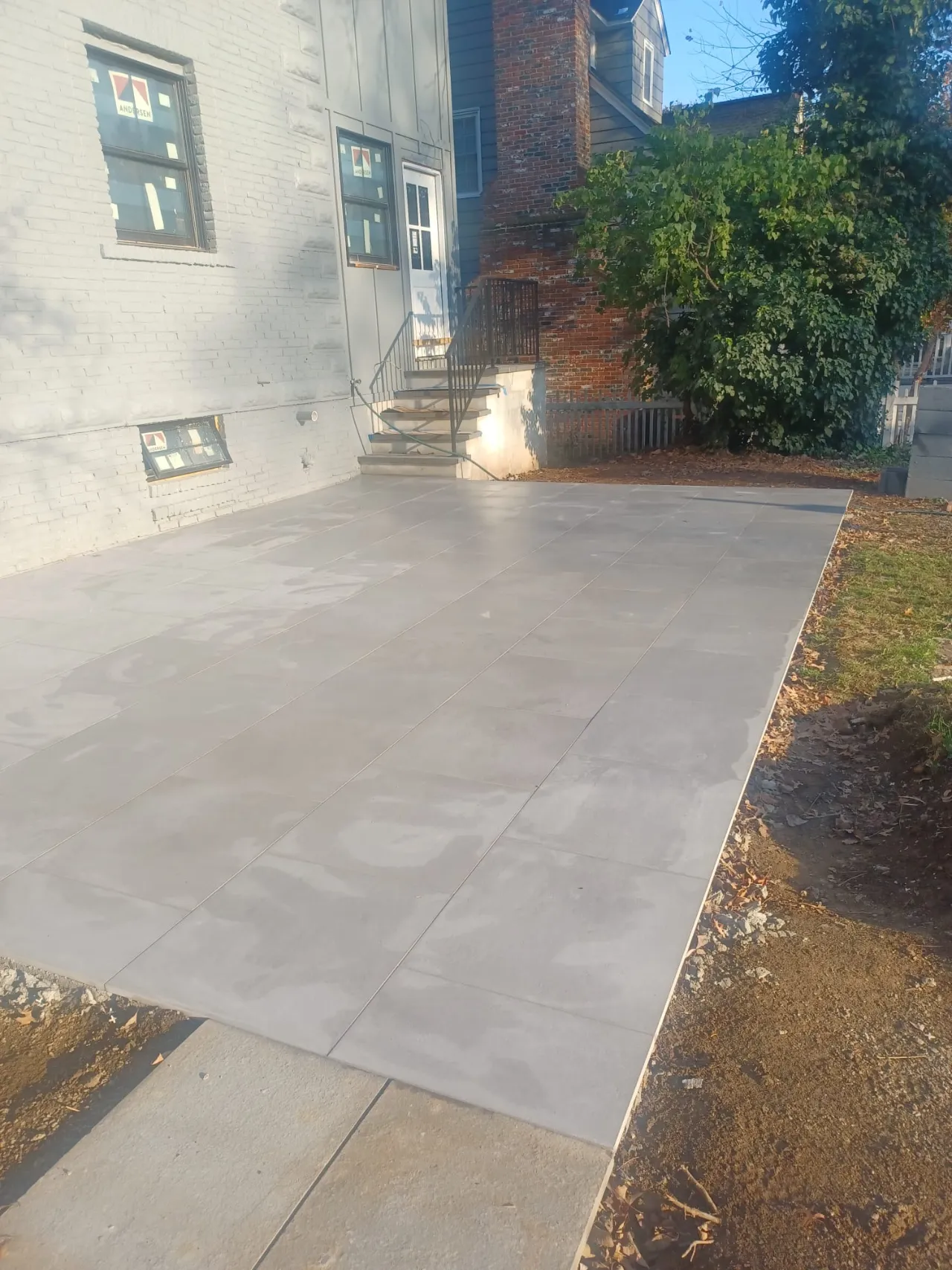
The appropriate foundation type depends on the building design, soil conditions, and budget. Slab-on-grade foundations are the most economical option for flat sites with stable, well-draining soil. The slab serves as both the foundation and the finished floor, with thickened edges at the perimeter and under load-bearing walls. This type is common for garages, additions, and single-story commercial buildings.
Crawl space foundations provide a raised floor system that allows access to mechanical systems beneath the building. In New Jersey, crawl spaces require ventilation or encapsulation to manage moisture — an important consideration in the state's humid climate. We install properly sized foundation vents or closed-cell spray foam encapsulation systems depending on the design and local code requirements.
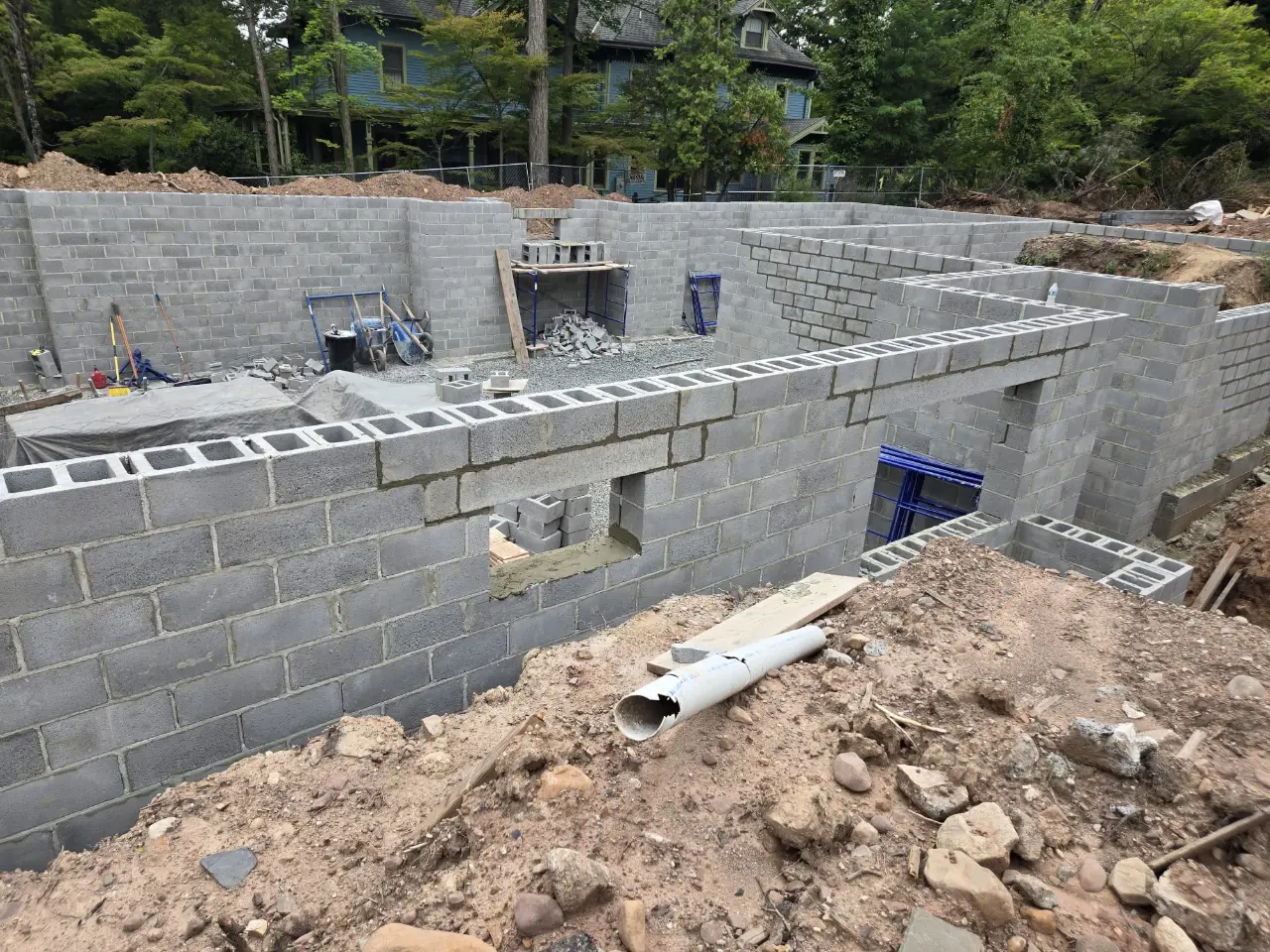
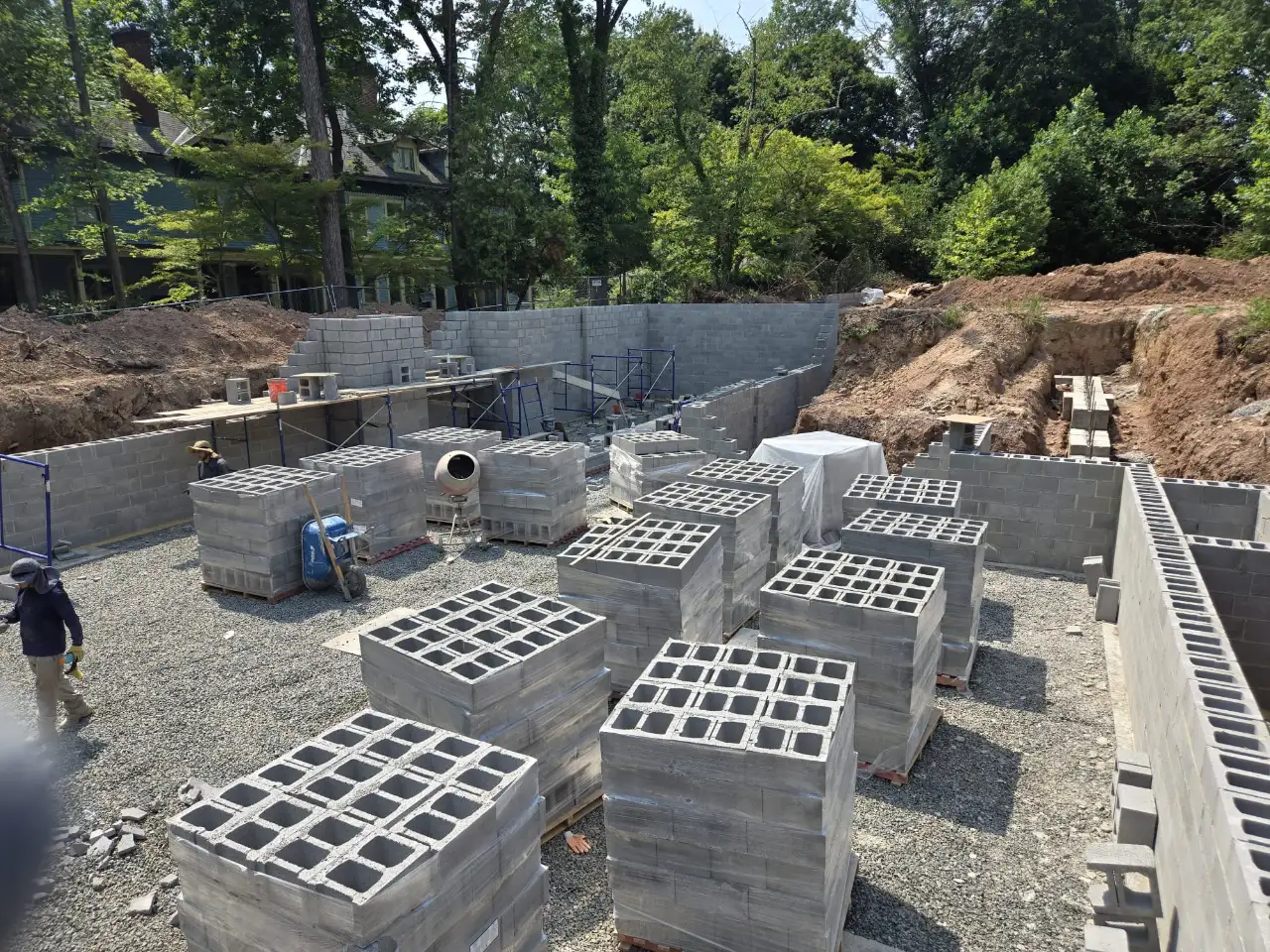
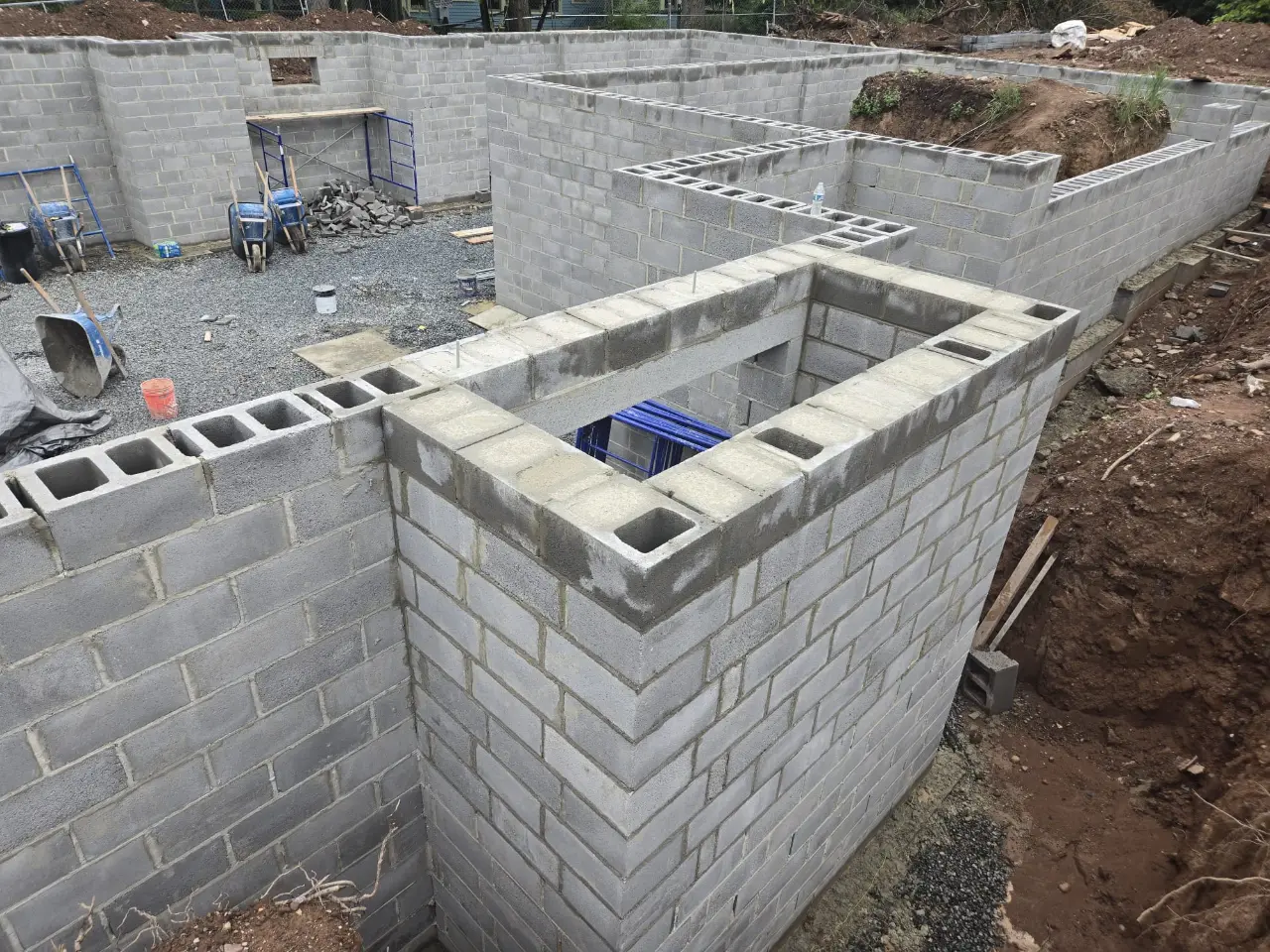
Full basement foundations offer the greatest usable square footage and are the most common choice for new residential construction in New Jersey. The excavation cost is higher, but the finished basement adds significant living or storage space. We construct basement walls using poured concrete, which provides superior strength and waterproofing performance compared to concrete masonry unit construction for below-grade applications.
No repair is more disruptive or expensive than a foundation failure. Settlement cracks, bowing walls, water infiltration, and structural movement all trace back to inadequate foundation design or construction. In New Jersey, where heavy clay soils in some areas expand and contract seasonally, a foundation that was not designed for those specific conditions can show distress within a few years of construction.
Building departments in New Jersey require foundation work to be permitted and inspected at multiple stages — footing inspection before concrete is poured, wall inspection before backfill, and final inspection at project completion. Working with a licensed contractor ensures that your foundation passes each of these inspections and that the work is documented in the public record.
The quality of the foundation directly affects every system in the building above it. Doors that stick, windows that crack, and drywall that separates are often symptoms of foundation movement rather than finish problems. Investing in a properly engineered and installed foundation from the start eliminates these downstream issues and protects the full value of your construction investment.
ADM Masonry LLC is based in Newark, NJ and serves residential and commercial clients throughout Essex, Hudson, Union, Bergen, and Passaic counties. Our licensed crew is available for projects large and small across the state.
Request a free estimate for your New Jersey project. Our licensed crew provides clear written quotes with no obligation.