ADM Masonry LLC provides professional masonry repointing for brick, stone, and block structures across New Jersey. Deteriorated mortar joints allow water infiltration that accelerates structural damage — our licensed crew removes failing mortar and installs new joints that restore weather resistance and wall integrity.
Mortar is the sacrificial element in a masonry wall — it is softer than the brick or stone it bonds by design, absorbing stress and seasonal movement so the units themselves remain intact. As mortar ages, it shrinks, loses adhesion, and develops surface cracks that allow water to penetrate the wall. In New Jersey's climate, where freeze-thaw cycling occurs repeatedly each winter, water in a deteriorated mortar joint expands as it freezes, progressively widening the joint and accelerating the damage.
Repointing — the removal of deteriorated mortar to a minimum depth and installation of new mortar in its place — is the primary maintenance procedure for extending the life of any brick, stone, or concrete masonry unit structure. ADM Masonry LLC provides repointing services for residential and commercial properties throughout New Jersey, addressing everything from single-wall sections in need of localized repair to complete building repointing projects for older structures with widespread joint deterioration.
The most common mistake in repointing is applying new mortar over deteriorated mortar without removing the failed material first. This approach — sometimes called skim pointing or surface pointing — appears to solve the problem visually but fails within one or two freeze-thaw cycles because the new mortar has no mechanical bond to the deteriorated surface below it. Proper repointing requires removing the old mortar to a minimum depth of three-quarters of an inch before new mortar is applied.
ADM Masonry LLC's repointing process begins with a joint survey to assess the depth and extent of mortar deterioration across the wall surface. We identify areas of complete joint failure — where mortar has fallen out entirely — as well as areas with surface cracking, shrinkage, and loss of adhesion to the adjacent masonry units. This assessment determines the full scope of work and allows us to identify any underlying issues — such as water infiltration sources or structural movement — that need to be addressed before repointing begins.
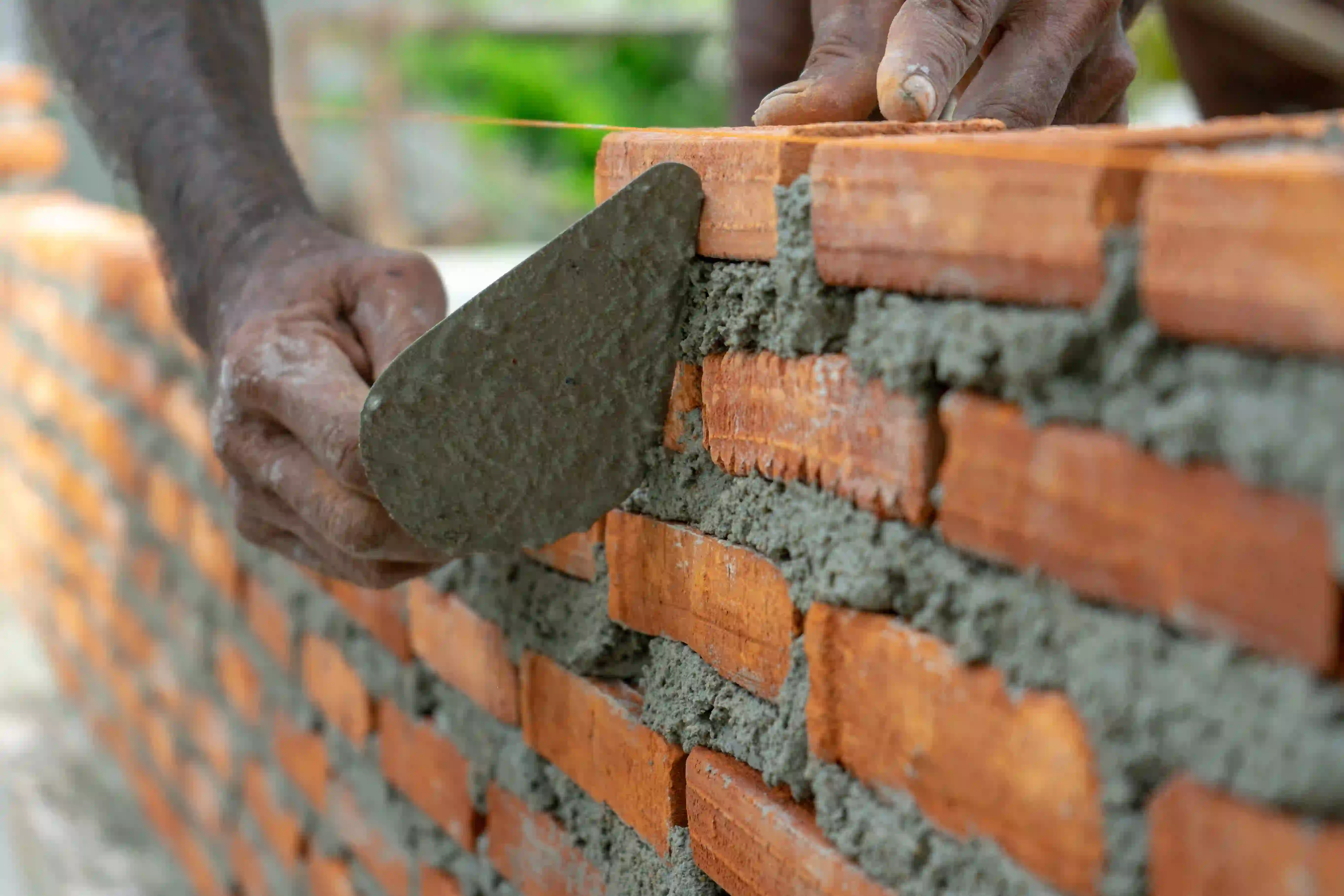
Joint removal is performed with angle grinders fitted with mortar raking blades or with oscillating multi-tools for tight joint widths. We remove mortar to a minimum depth of three-quarters of an inch — deeper if the deterioration extends further. The joint cavity is then cleaned of all dust and debris with a stiff brush and compressed air, and dampened to prevent the existing masonry from drawing moisture too rapidly from the new mortar. Pre-dampening is particularly important in New Jersey's summer heat when rapid drying can prevent proper mortar curing.
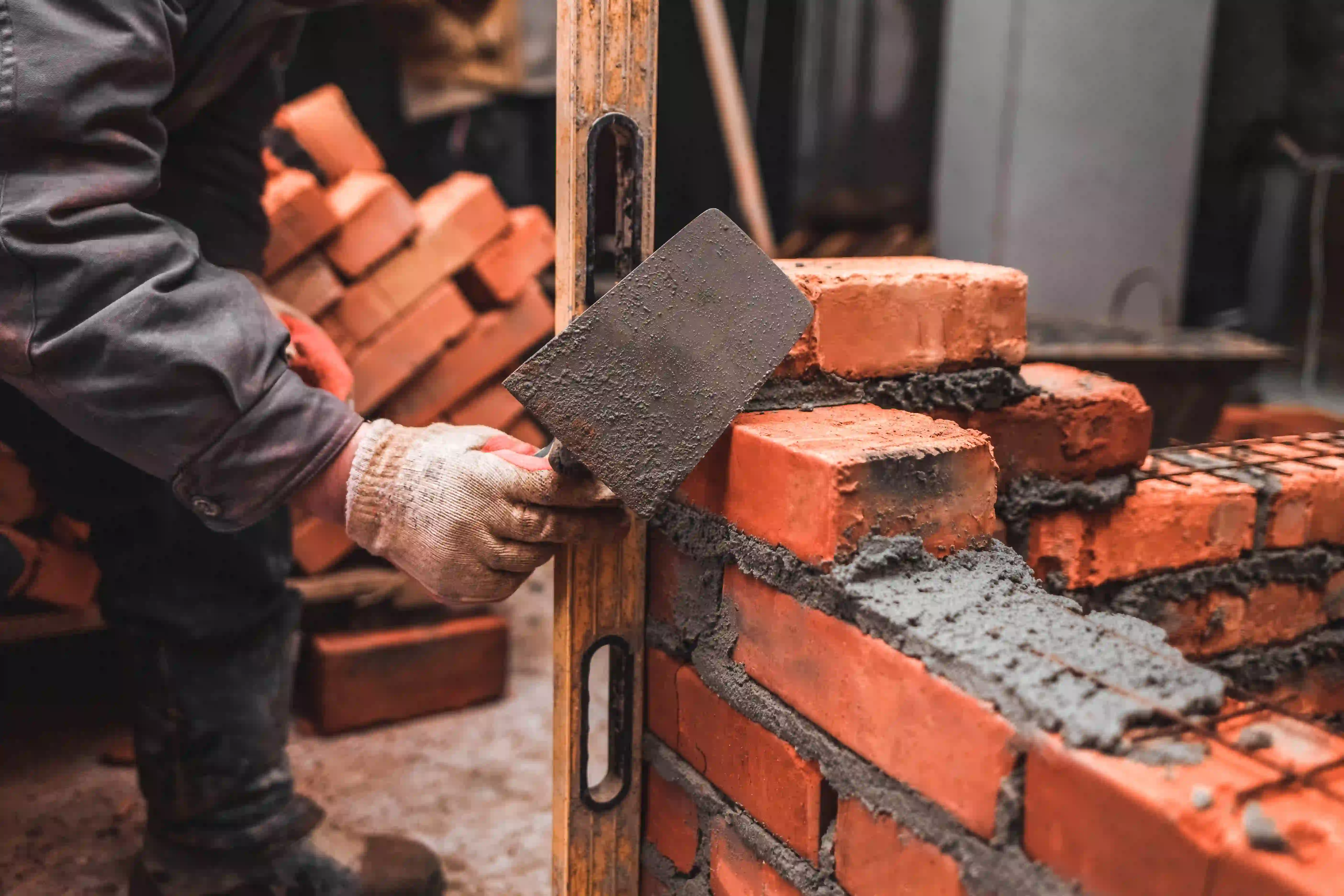
New mortar is applied in two passes for deep joints — a first pass filling the cavity to approximately half depth, allowed to firm up, followed by a second pass that fills the remaining depth and is tooled to the specified joint profile. The joint profile is selected based on the existing wall condition and exposure: a concave or rodded joint is standard for exterior applications in New Jersey because it sheds water effectively. Flat-cut and raked profiles that collect standing water are avoided on exposed exterior surfaces.
Mortar type selection is one of the most technically important decisions in any repointing project. The new mortar must be equal to or slightly softer than the original mortar — and always softer than the masonry units being repointed. A mortar that is harder than the adjacent brick or stone will transfer stress into the units rather than absorbing it in the joint, causing the brick faces to spall and crack. This is a particularly common problem in historic New Jersey structures where the original soft brick is repointed with modern high-strength mortar.
ASTM C270 classifies mortar by type — M, S, N, O — with M being the strongest and O the weakest. Modern brick construction typically uses Type S mortar for exterior applications. Historic structures built before 1920, which used much softer lime-based brick, should be repointed with Type O or a custom lime-portland blend that matches the flexibility and compressive strength of the original mortar. ADM Masonry LLC matches mortar type to the specific masonry being repointed based on its age, brick hardness, and exposure conditions.
Color matching — replicating the original mortar color as closely as possible — requires testing on a small section before committing to the full installation. Fresh mortar is always lighter than cured mortar, and the final color is affected by the sand aggregate used, the water-to-cement ratio, and the curing conditions. ADM Masonry LLC provides color sample tests for clients who require a close match to existing mortar on historic or architecturally sensitive buildings in New Jersey.
The cost of repointing increases significantly as the extent of joint deterioration advances. Early-stage repointing — addressing joints with surface cracking and shrinkage before they fail completely — is the least expensive intervention and produces the best long-term result. Once joints have failed through their full depth and water has been infiltrating the wall for multiple seasons, the masonry units themselves begin to spall and crack, and the scope of repair expands from joint work to brick replacement as well.
Water infiltration through deteriorated mortar joints in New Jersey residential structures causes damage that extends well beyond the masonry itself. Water that enters a wall system through failed joints saturates the insulation, promotes mold growth in the wall cavity, damages interior finishes, and in severe cases reaches wood framing members and promotes rot. The cost of correcting interior water damage from a deteriorated masonry facade significantly exceeds the cost of timely repointing.
The optimal time to repoint masonry in New Jersey is between May and October, when ambient temperatures are consistently above 40 degrees Fahrenheit and not expected to drop below freezing within 48 hours of mortar placement. New mortar must be protected from freezing during its initial curing period — frozen mortar loses bond strength and will fail prematurely. ADM Masonry LLC schedules repointing projects within the appropriate temperature window and monitors weather forecasts to avoid cold-weather curing problems.
ADM Masonry LLC is based in Newark, NJ and serves residential and commercial clients throughout Essex, Hudson, Union, Bergen, and Passaic counties. Our licensed crew is available for projects large and small across the state.
Request a free estimate for your New Jersey project. Our licensed crew provides clear written quotes with no obligation.